

What if your deck wasn’t just a place for summer barbecues, but a strategic asset that actually gained value despite the brutal Nor’easters? Most homeowners feel the sting of anxiety when winter ice causes wood to splinter or summer humidity brings that stubborn green mold. You’ve likely seen your beautiful stain fade under the intense July UV rays and wondered if there’s a reliable way to stop the cycle of decay. Finding the right wood deck maintenance tips for new england is the first step in transforming your outdoor space from a source of stress into a lasting sanctuary.
We believe that your home deserves a protective partner to navigate these environmental challenges. This guide provides the essential steps to defend your property against our unique four-season climate. We’ll show you how to establish a clear maintenance schedule and select products, like infrared reflective stains, that can handle local temperature swings. You’ll gain the confidence to identify structural damage early and learn exactly what’s required to keep your outdoor space safe and stunning for years to come.
Key Takeaways
- Understand how the freeze-thaw cycle impacts wood fibers and why winter preparation is non-negotiable for Massachusetts homes.
- Master a seasonal schedule that includes the best wood deck maintenance tips for new england to combat everything from spring mold to summer UV exposure.
- Learn the step-by-step process for deep cleaning with oxygen bleach to safely eliminate mildew without damaging your deck’s surface.
- Identify critical safety vulnerabilities in your ledger board and flashing that could lead to costly rot or foundation issues.
- Discover how professional decking installation and repair services provide long-term security and aesthetic renewal for your outdoor living space.
New England Weather vs. Your Deck: Understanding the Local Climate Toll
Living in New England means your home faces some of the most diverse weather patterns in the country. Your deck doesn’t just sit outside; it actively battles a four-season assault that can quickly turn a beautiful outdoor space into a structural liability. Understanding how these elements interact is the foundation for effective wood deck maintenance tips for new england. Without a proactive plan, the transition from a frozen January to a humid July can cause irreversible damage to the wood’s cellular structure.
To better understand how professional cleaning preserves your deck’s integrity, watch this helpful video:
The most destructive force in our region is the freeze-thaw cycle. When autumn rains soak into the wood fibers, that moisture remains trapped deep within the grain. As temperatures drop below freezing, the water expands, physically pushing the wood fibers apart. This process creates microscopic cracks that grow larger every year. To combat this, many homeowners rely on advanced wood preservation techniques to seal out moisture before the first frost arrives.
Summer brings a different kind of threat: UV radiation. High-altitude sun in the Northeast bleaches the wood and breaks down lignin, the natural “glue” that holds wood fibers together. When lignin fails, the wood becomes brittle and prone to splintering. This damage is often compounded by our infamous mud season. The damp, stagnant air of a Massachusetts spring provides the perfect breeding ground for mildew spores, which can lead to deep-seated rot if left unchecked.
The Impact of Heavy Snow and Ice
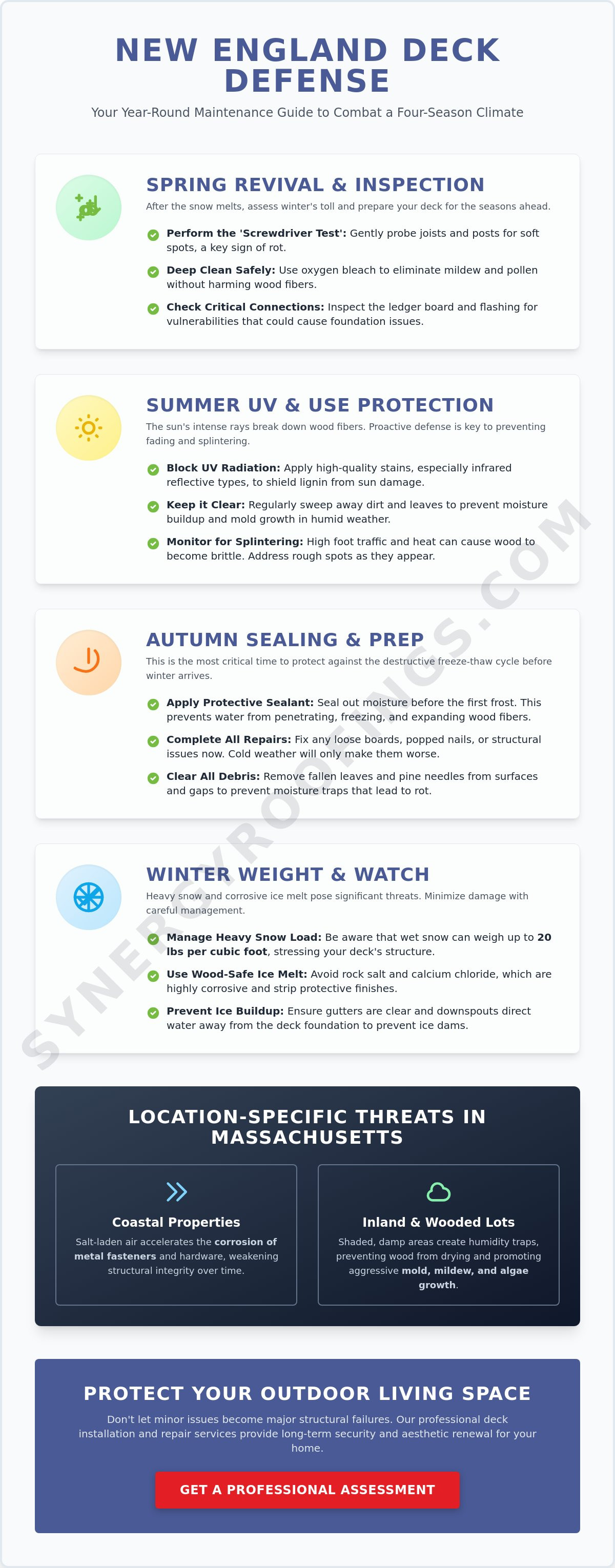
Accumulated snow is more than just a shoveling chore; it’s a massive weight load on your deck’s joists and ledger boards. A single cubic foot of wet snow can weigh up to 20 pounds. Beyond the weight, ice melt chemicals like salt and calcium chloride can be incredibly corrosive. These substances often strip away finishes and dry out the wood, leaving it vulnerable to the elements once the snow finally melts. Long-term snow cover also traps moisture against the surface for months, which is a primary cause of board failure.
Coastal vs. Inland Considerations in Massachusetts
Your location in the state dictates your specific maintenance needs. Coastal properties deal with salt air, which accelerates the corrosion of deck hardware and fasteners. If you live inland in a wooded lot in Medway, your main concern is likely humidity traps. Shaded areas prevent wood from drying out after rain, which invites mold and algae growth. In Norfolk County, rapid temperature swings cause wood to expand and contract quickly. This constant movement makes following consistent wood deck maintenance tips for new england essential for every homeowner in our community.
The Ultimate New England Seasonal Deck Maintenance Calendar
Maintaining a deck in the Northeast requires more than a casual sweep. You need a structured approach that respects the rhythm of our seasons. By following a dedicated calendar, you can prevent minor weathering from turning into structural failure. These wood deck maintenance tips for new england are designed to help you stay ahead of the environmental stress that local homes face every year. We view this process as a strategic defense for your property, ensuring your outdoor investment remains a safe and beautiful asset.
Spring Cleaning and Inspection Rituals
Once the snow finally retreats, your priority is assessment. We recommend the ‘Screwdriver Test’ to check for structural health. Take a flathead screwdriver and gently probe the joists, posts, and any areas where wood meets wood. If the tip sinks easily into the grain, you’ve identified a soft spot where moisture has compromised the material. This is also the time to clear debris from the gaps between your deck boards. Airflow is essential for drying out the wood after a long winter; clogged gaps trap moisture and accelerate rot.
Before you apply any new treatments, you must remove the layer of pollen and mold that accumulates during our damp spring months. A clean surface is the only way to ensure a fresh coat of sealer will bond correctly. If you’re unsure about the state of your deck’s finish, our experts at Synergy Roofing can provide a professional evaluation of your home’s exterior health to help you plan your next steps.
Fall Prep: Safeguarding Against the Freeze
As the leaves turn, your maintenance focus should shift to protection. Clearing leaves and pine needles is a daily task in many parts of Norfolk County, but it’s vital. These organic materials hold water against the wood, creating stains and rot traps. This is your final window for sealing the wood before the deep freeze. According to this USDA guide to wood deck finishes, the timing of your application significantly impacts the longevity of the protection. You want the sealer to be fully cured before the first snowfall.
Don’t forget to inspect the ledger board, which is the point where the deck attaches to your house. Check the flashing for any signs of gaps or rust. A failure here doesn’t just damage the deck; it can lead to water intrusion in your home’s foundation. During the winter months, practice safe snow removal by using a plastic shovel. Metal blades gouge the wood and strip away the protective coatings you worked so hard to apply in the fall. Always shovel in the direction of the boards to minimize surface friction and keep your deck’s finish intact.
Deep Cleaning and Sealing Your Wood Deck: A Step-by-Step Guide
Restoring your deck’s appearance and structural integrity requires a methodical approach. In our region, skipping a step or using the wrong product can lead to premature peeling or rot. These wood deck maintenance tips for new england focus on techniques that respect the wood’s natural properties while providing a high-quality defense against the elements. We aim to turn a complex task into a straightforward project that secures your property for the coming seasons.
Step 1: Clear and Sweep. Remove all furniture, grills, and planters from the surface. Perform a thorough dry sweep to clear away pine needles, leaves, and dirt. This prevents organic matter from turning into a staining sludge once you introduce water to the boards.
Step 2: Apply Oxygen Bleach. Use a region-appropriate oxygen bleach cleaner. Unlike harsh chlorine bleach, oxygen bleach kills mildew spores without stripping the wood’s natural color or harming your surrounding landscaping. It’s particularly effective for treating the damp spring mold common in Massachusetts.
Step 3: Scrub Gently. Use a synthetic stiff-bristle brush to work the cleaner into the grain. While many generic guides suggest high-pressure washing, gentle scrubbing is often better for the wood’s longevity. It removes the deep-seated grime without damaging the delicate wood fibers.
Step 4: The Water Bead Test. Once the deck is clean and completely dry, sprinkle some water on different areas. If the water beads up, your current seal is still providing protection. If the water soaks in immediately, your wood is thirsty and requires a new coat of sealer to stay protected.
Step 5: Seal for Humidity. Apply your chosen product during a stretch of dry weather. In New England, you need a sealer that can handle high humidity levels without becoming tacky or failing to cure properly.
Choosing the Right Stain for the Northeast
Your choice of stain determines how often you’ll need to repeat this labor-intensive process. Transparent stains show the natural grain but offer the least UV protection. Solid stains act like paint, covering the grain but providing a thick shield against the sun. For most Norfolk County homes, semi-transparent stains offer the best balance of beauty and protection. Oil-based products are often preferred in high-moisture zones because they penetrate deep into the wood rather than just sitting on the surface. Always ensure your product includes UV-resistant additives to combat the bleaching effect of the intense summer sun mentioned earlier.
Pressure Washing Mistakes to Avoid
High-pressure washing is a common cause of “fuzzing,” where the water pressure physically destroys the wood fibers and leaves a furry texture. This ruins the aesthetic and makes the wood much more absorbent and prone to rot. For pressure-treated lumber, keep your settings below 1,500 PSI. For softer woods like Cedar or Redwood, stay under 1,000 PSI. Most importantly, you must wait at least 48 hours for the wood to dry before staining. Our local humidity can trap moisture inside the boards, which will eventually cause your new stain to bubble and peel from the inside out.
Structural Integrity: Identifying Common Wood Deck Issues in Massachusetts
Beyond the surface aesthetics we discussed earlier, the structural skeleton of your deck requires a high-quality inspection to ensure long-term safety. In our experience, many homeowners focus on the boards they can see while neglecting the critical connection points that actually hold the structure to the house. Integrating these structural checks into your wood deck maintenance tips for new england is vital for preventing catastrophic failures during heavy snow loads or high-traffic summer gatherings. We view these inspections as a protective partnership between the homeowner and the property’s longevity.
The ledger board is the most significant safety point for any New England home. This horizontal beam connects your deck directly to your house’s rim joist. If the flashing, the protective metal shield behind this board, fails, water will seep into your home’s framing. This often stems from an unresolved roof leak repair or poorly managed drainage. When moisture stays trapped here, it rots the wood from the inside out, often hidden from view. You should also look for hardware corrosion; if your hangers, bolts, or nails show heavy rust, they’ve lost their structural capacity. Finally, check the posts where the wood meets the concrete footings. If the base of the post is soft or crumbling, your deck’s foundation is compromised.
When Gutters and Roofs Attack Your Deck
Your deck’s lifespan is inextricably linked to the health of your roof and gutter system. Failing gutters often cause splash-back damage, where water overflows and saturates the deck boards closest to your siding. This constant dampness creates a micro-climate for rot that no sealer can fully prevent. Additionally, ice dam runoff during our brutal winters can send massive amounts of water directly onto your deck’s primary supports. Ensuring your Asphalt Shingle Roofing is in top condition protects more than just your attic; it safeguards your outdoor living space from unnecessary water stress. If you suspect your drainage is compromising your deck, we can help you evaluate your gutter and roofing systems for total home protection.
Repair vs. Replace: Making the Call
Deciding whether to fix a specific issue or start fresh is a common dilemma for Massachusetts homeowners. We often suggest the 25% Rule: if the cost of necessary structural repairs exceeds 25% of the cost of a new deck, a full replacement is usually the smarter investment. Following comprehensive wood deck maintenance tips for new england includes knowing when a board can be saved and when it poses a risk. It’s important to distinguish between cosmetic graying, which is a natural aging process, and structural rot, which feels soft or spongy to the touch. Modernizing your deck during repairs also allows you to bring the structure up to current Massachusetts building codes, which have evolved to prioritize safety in our harsh climate.
Professional Deck Solutions: How Synergy Roofing Protects Your Outdoor Living Space
Your home is a complex system where every component relies on the next. While many know us for our expertise in protecting what’s overhead, our commitment extends to the total exterior health of your Medway property. We understand that a high-quality deck is more than just a platform; it’s a significant investment that requires a specialized defense strategy. By integrating the same level of precision we use in roofing into our decking services, we provide a unified shield for your home. This holistic approach ensures that your outdoor living space remains safe, stable, and ready for whatever Norfolk County weather has in store. We take pride in being more than just a contractor; we’re your protective partner.
Expertise matters when it comes to longevity. Our team specializes in both decking installation and repair, tailored specifically for the unique environmental stressors of the Northeast. We’ve seen how freeze-thaw cycles and humidity can ravage poorly built structures, leading to costly replacements earlier than expected. That’s why our professional solutions focus on long-term resilience and structural renewal. Following the right wood deck maintenance tips for new england is essential for your seasonal routine, but professional oversight provides the final piece of the puzzle. When you partner with us, we ensure the underlying foundation of your home’s exterior is built on professional-grade craftsmanship that stands the test of time.
The Synergy Advantage lies in our ability to see the big picture. We don’t just look at boards; we look at how your gutters, roofline, and deck interact to manage moisture. A deck that stays dry is a deck that lasts. By combining our knowledge of water shedding and structural support, we eliminate the common points of failure that plague many Massachusetts homes. This comprehensive perspective gives you the quiet confidence that every part of your home’s exterior is working in harmony to safeguard your family. We focus on creating a secure environment so you can focus on enjoying your home.
Our Decking Installation Philosophy
We don’t believe in shortcuts. Our philosophy centers on using premium, rot-resistant materials that are specifically selected for New England’s climate. Every project we undertake prioritizes precision flashing and ledger board attachment. As we mentioned in the structural integrity section, these are the areas where house-side rot begins. By securing these points with industry-leading techniques, we protect your home’s foundation from water intrusion. We also ensure our custom designs complement your existing Asphalt Shingle Roofing and architectural style, creating a cohesive and durable exterior that boosts your property’s value.
Schedule Your Exterior Health Assessment
Don’t wait for a structural failure to address your deck’s needs. Preventive maintenance and early intervention save thousands of dollars in the long run. A professional inspection is the most reliable way to ensure a worry-free summer for you and your family. We can identify hidden corrosion, ledger issues, or drainage problems before they become emergencies. Contact Synergy Roofing today for a comprehensive evaluation of your deck and roof. Our experts provide the transparency and honesty you need to make informed decisions about your home. Protect your investment and your family with our expert services.
Prepare Your Outdoor Space for the Seasons Ahead
Your deck is a vital part of your home’s exterior ecosystem. We’ve explored how the freeze-thaw cycle stresses wood fibers and why a dedicated seasonal calendar is your best defense. By mastering these wood deck maintenance tips for new england, you aren’t just cleaning a surface; you’re safeguarding your property against the unique environmental pressures of the Northeast. From identifying ledger board decay to choosing the right oil-based sealer, every step counts toward long-term durability and safety for your family.
As local Medway, MA experts and Velux Skylight Specialists, we provide comprehensive roofing and decking solutions designed for total home protection. We’re here to ensure your exterior transitions seamlessly through every season, giving you the peace of mind you deserve. Secure Your Home’s Exterior with Synergy Roofing & Decking today. We take pride in helping our neighbors build lasting, beautiful outdoor spaces. You can rest easy knowing your outdoor retreat is prepared for whatever the next Nor’easter brings.
Frequently Asked Questions
How often should I stain my wood deck in New England?
Most homeowners should plan to restain their deck every two to three years depending on the type of finish used. High-traffic areas and decks with transparent stains may require attention every two years due to our intense freeze-thaw cycles. Applying these wood deck maintenance tips for new england ensures that you’re protecting the wood fibers before they become brittle and prone to splintering from winter ice.
What is the best way to remove snow from a wood deck without damaging it?
You should always use a plastic shovel and push the snow parallel to the deck boards to avoid gouging the wood. Never use metal-tipped shovels or ice chippers, as they’ll strip away your protective sealant and damage the grain. Avoid using salt or calcium chloride, which can dry out the wood and corrode your hardware; instead, use a broom for light dustings to keep the surface clear.
Can I use a pressure washer on my Cedar deck?
You can use a pressure washer on Cedar, but you must keep the setting below 1,000 PSI to prevent damaging the soft wood fibers. High pressure often causes “fuzzing,” which destroys the aesthetic and makes the wood more absorbent. We generally recommend a gentle scrubbing with a stiff-bristle brush and an oxygen bleach cleaner as a safer alternative that preserves the wood’s structural integrity over time.
Why is my deck turning green, and how do I stop it?
The green growth is typically algae or moss fueled by New England’s humid spring and shaded environments. It thrives when moisture stays trapped on the wood surface for extended periods. You can stop this by clearing debris from between the boards to improve airflow and applying a region-appropriate mildewcide. Regular cleaning prevents these spores from taking root and causing deep-seated rot in your foundation.
Is it better to stain a deck in the spring or the fall in Massachusetts?
Fall is often the ideal time for staining because the wood is at its driest point after the summer heat. This allows the sealer to penetrate deeper into the grain for a high-quality bond. While spring is a popular time for cleaning, the high pollen counts and frequent rain showers can interfere with the curing process, leading to a finish that might peel or bubble prematurely.
How do I know if my deck’s ledger board is rotting?
You can identify ledger board rot by performing a “screwdriver test” on the wood behind the metal flashing. If the screwdriver easily penetrates the wood or if you see significant rust on the lag bolts, the structural connection is compromised. Look for any visible gaps between the deck and the house siding, which suggests that water is bypassing the flashing and saturating the rim joist.
What kind of wood is most durable for the New England climate?
Ipe and Mahogany are the most naturally durable hardwoods for our region, though they require a higher initial investment. As of 2026, many homeowners are choosing composite or PVC decking for their superior resistance to moisture and rot. If you prefer traditional lumber, pressure-treated Southern Yellow Pine remains the standard for its ability to withstand ground contact and the deep frost lines found in Norfolk County.
Do I need a permit for deck repairs in Medway, MA?
In Massachusetts, you generally need a building permit if your deck is attached to the house, more than 30 inches above the ground, or exceeds 200 square feet. While minor board replacements might not require one, any structural repair involving joists or the ledger board typically triggers a permit requirement. You should check with the Medway Building Department to confirm current local fees and specific frost depth regulations for your project.
