

Imagine waking up after a massive Nor’easter and, instead of grabbing a roof rake in a panic, you simply enjoy your coffee while the snow slides harmlessly to the ground. For many in Massachusetts, winter brings a recurring cycle of stress over ice dams and heavy snow loads. You aren’t alone if you’ve spent the last few seasons researching the benefits of metal roofing in snowy climates to see if your home can survive another 70 inches of snowfall. We understand that your property is your most significant priority, and protecting it requires a solution that’s as hardworking as you are.
In this 2026 guide, you’ll discover why a metal roof is the ultimate structural defense for your home. We’ll show you how these systems provide psychological relief by ending the threat of ice dams and helping your home comply with the mandatory 10th edition of the Massachusetts State Building Code. You’ll also learn about the shift from expired federal tax credits to local Mass Save incentives, giving you a clear, professional path toward a more secure and energy efficient future.
Key Takeaways
- Learn how metal’s surface friction and thermal properties work together to shed heavy snow before it stresses your home’s structure.
- Discover the long-term benefits of metal roofing in snowy climates, including a lifespan that can triple that of traditional asphalt shingles.
- Understand the physics behind snow guard systems and how they prevent dangerous “snow slides” from damaging your landscaping or gutters.
- Find out why a professional winter installation is not only possible with metal but often more efficient than waiting for spring.
Understanding the Winter Load: Why Massachusetts Snow Demands Better Roofing
Living in Norfolk County means preparing for a specific kind of winter intensity. When a Nor’easter rolls through Medway, it doesn’t just bring cold air; it brings thousands of pounds of pressure that rest directly on your home. Traditional asphalt shingles often act like a sponge, trapping moisture and holding onto snow longer than your roof trusses were designed to handle. One of the most significant benefits of metal roofing in snowy climates is its ability to shed this weight before it becomes a structural hazard. Unlike porous materials that allow water to seep into small crevices, metal provides a slick, non-porous surface that encourages snow to move off the roof naturally.
The constant “Freeze-Thaw” cycle in Massachusetts is particularly brutal on standard roofing materials. During the day, the sun melts the top layer of snow, which then seeps into the shingle granules. When temperatures drop at night, that water expands as it turns to ice, literally popping the granules off and weakening the shingle’s integrity. Over time, this leads to thinning material and inevitable leaks. Shifting to a more durable system provides a permanent shield against this erosion. For a foundational look at these materials, you can explore this Metal roofing overview to see why these systems are built for longevity.
To better understand how these systems handle the elements, watch this helpful video showing a metal roof in action:
The Danger of Snow Accumulation and Structural Stress
The weight difference between “powder” and “wet snow” is staggering. While light powder might not cause immediate concern, a single cubic foot of wet, heavy snow can weigh up to 21 pounds. When you multiply that across the entire square footage of a Norfolk County home, you’re looking at several tons of stress. Metal roofs distribute this weight more evenly and, more importantly, they allow the snow to slide off before it reaches critical mass. Local Medway building projects must now comply with the 10th edition of the Massachusetts State Building Code, which enforces strict standards for snow loads. When you weigh the benefits of metal roofing in snowy climates against traditional materials, the structural relief it provides to your rafters and trusses is a clear advantage for long-term safety.
Ice Dams: The Silent Killer of Traditional Roofs
Ice dams occur when heat escaping from your attic melts the bottom layer of snow on your roof. This water runs down to the cold eaves and refreezes, creating a thick ridge of ice that traps subsequent meltwater behind it. On an asphalt roof, this trapped water has nowhere to go but under the shingles and into your ceilings. Metal roofs solve this by utilizing a smooth, high-friction-reducing surface that prevents ice from “gripping” the edge of the roof. This proactive shedding eliminates the root cause of the dam. If you’re currently dealing with the aftermath of a winter storm, seeking professional roof leak repair is essential to prevent mold and structural rot before your next upgrade.
The Physical Advantages of Metal Roofing in Freezing Conditions
The resilience of your home during a Massachusetts winter depends heavily on how your roofing material responds to extreme temperature drops. While traditional asphalt shingles can become brittle and prone to cracking when temperatures dip below zero, metal remains flexible and structurally sound. This material stability is one of the most practical benefits of metal roofing in snowy climates. It doesn’t just sit there; it performs. A high-quality metal system also relies on advanced synthetic underlayment. This serves as a critical secondary water barrier, ensuring that even if wind-driven snow finds a way into a seam, your home’s interior remains completely dry.
Metal’s ability to handle thermal expansion and contraction without losing its integrity is a game-changer for New England homeowners. You won’t have to worry about the shingles “cupping” or losing their protective granules after a single harsh season. Instead, you get a consistent, reliable shield that maintains its aesthetic and functional value for decades. If you are considering a permanent upgrade for your property, exploring a professional metal roofing installation can provide the peace of mind you need before the next storm hits.
Superior Snow Shedding and Surface Slickness
The primary reason snow accumulates on a roof is surface friction. Asphalt shingles are designed with a rough, sandpaper-like texture that effectively “grabs” snow, allowing it to pile up into a heavy blanket. Metal roofs have a significantly lower friction coefficient. Even a small amount of sunlight provides enough thermal energy to warm the metal panels. This heat melts the microscopic bottom layer of snow, creating a lubricated surface that allows the entire mass to slide off safely. This natural shedding process prevents the “heavy blanket” effect that causes so much stress on older wooden rafters. To manage this movement effectively, many homeowners utilize Snow retention systems to ensure the snow falls in controlled amounts rather than all at once.
Thermal Efficiency and Heat Retention
Modern metal roofs are engineered with reflective coatings that do more than just look sharp. In the winter, these coatings help reduce heat loss by reflecting radiant heat back into your living space. When combined with proper attic insulation, a metal roof creates a highly efficient thermal envelope. This synergy keeps your home warmer and significantly reduces the strain on your heating system. Homeowners often notice a drop in their monthly utility bills during the peak of a Massachusetts winter because their roof is no longer a primary source of energy loss. It’s a sophisticated solution that turns your roof from a passive cover into an active participant in your home’s energy management.
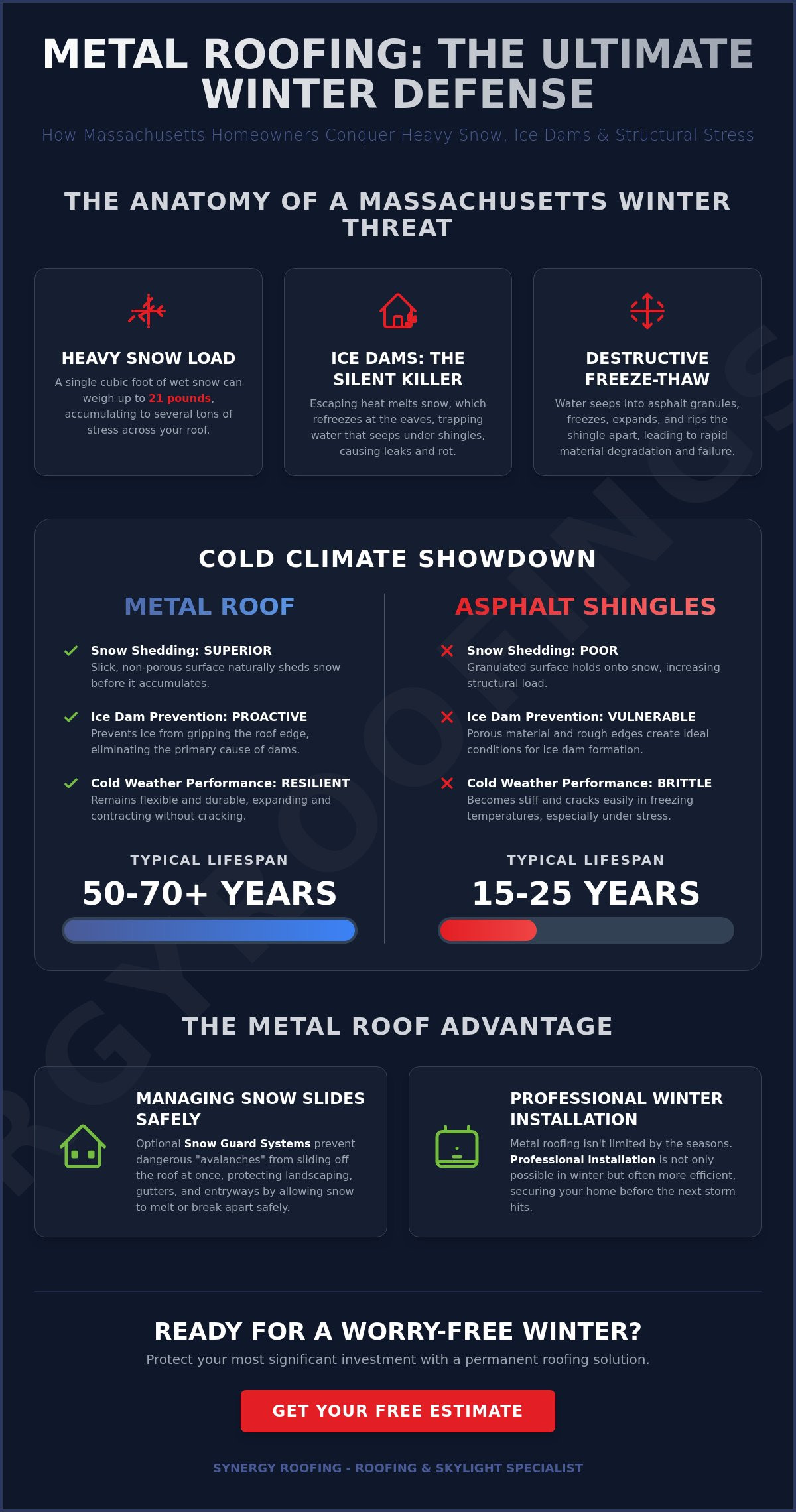
Metal vs. Asphalt Shingles: A Cold-Climate Performance Showdown
Choosing between materials often comes down to a balance of initial cost and long-term security. While asphalt is the most common choice, the benefits of metal roofing in snowy climates become clear when you look at the lifespan data. In the demanding New England environment, a standard asphalt roof typically lasts 15 to 20 years before the freeze-thaw cycles take their toll. Metal systems are designed to protect your home for 50 years or more. This longevity means you aren’t just buying a roof; you’re investing in a permanent structural shield for your family.
Winter storms often bring more than just snow. Falling ice from overhanging branches or heavy hail can easily bruise or crack traditional shingles. Metal roofs provide superior impact resistance, maintaining their integrity where other materials might fail. This durability ensures your home’s curb appeal stays intact even after a decade of brutal winters. Metal doesn’t suffer from the granule loss or fading that eventually makes an asphalt roof look weathered and worn. It’s a low-maintenance solution that keeps your home looking sharp while providing elite protection.
Resilience Against Nor’easters and High Winds
Massachusetts Nor’easters are notorious for high wind speeds that can peel back individual shingle tabs. Asphalt shingles often “chatter” or lift during these events, creating entry points for wind-driven rain and snow. In contrast, metal roofing utilizes interlocking panel systems that provide exceptional wind uplift ratings. These panels are fastened securely to the deck, making it nearly impossible for the wind to get underneath them. If you’re currently weighing your options and want to understand the traditional route, our guide to asphalt shingle roofing explains how those systems perform under pressure. However, for those seeking the highest level of wind resistance, metal is the clear winner.
Long-Term ROI: Why Metal is the Protective Choice
When evaluating the cost of a new roof, it’s helpful to look at the “cost per year” rather than just the initial quote. Because a metal roof lasts two to three times longer than asphalt, the long-term investment is often much lower. You’ll avoid the expense and stress of multiple replacements over the decades. Additionally, metal roofing can significantly increase property value in Massachusetts, as savvy buyers recognize the value of a permanent roof. Many insurance companies also offer discounts for homes with fire and impact-resistant roofing. For a deeper dive into the engineering that makes this possible, this Metal Construction Association guide to cold-climate roofing provides professional insight into why metal is the standard for northern home protection.
Managing the “Snow Slide”: Safety and Snow Guard Systems
One of the most common concerns we hear from homeowners is the “avalanche” effect. While the rapid shedding of accumulation is one of the primary benefits of metal roofing in snowy climates, it can create a safety hazard if the movement isn’t managed correctly. Without proper retention, several hundred pounds of snow can slide off a steep pitch in a single second. This isn’t a flaw in the roofing material. Instead, it’s a predictable physical reaction that requires a professional engineering approach to ensure your walkways and landscaping remain protected.
Snow guards act as a braking system for your roof. By breaking up massive sheets of snow and ice into smaller, harmless pieces, these systems allow the roof to shed its load gradually. We focus on strategic placement to safeguard your home’s most vulnerable areas. This includes installing retention systems directly above entryways, garage doors, and sensitive outdoor equipment like HVAC units. When properly configured, these guards provide the psychological relief of knowing your family can enter and exit the home safely during a storm.
Types of Snow Retention Systems
There is no one size fits all solution for snow management. We typically recommend either snow rails or individual snow guards, often called cleats, depending on your roof’s pitch and aesthetic. Snow rails provide a continuous barrier that is highly effective for the heavy, wet snow common in Norfolk County. Individual cleats offer a more subtle look, dotting the roof surface to “pin” the snow in place. For the steep pitches found on many Medway homes, calculating the “drag load” is essential. This technical calculation ensures the guards are fastened securely enough to withstand the downward pressure of a full winter load without failing.
Protecting Your Perimeter and Landscaping
Standard gutters are often the first casualty of an unmanaged snow slide. If a heavy sheet of ice catches the lip of a gutter on its way down, it can easily tear the entire system away from the fascia. This is why heavy-duty, high-capacity gutters are a necessary partner for any metal roof. Beyond the roofline, you should also consider winter-proofing your deck and entryway areas to handle the increased moisture that occurs when shed snow piles up at the foundation. Integrating a professional gutter installation with your roofing project ensures that water and snow are diverted away from your home’s most critical priorities.
If you’re ready to secure your home against the next Nor’easter, we’re here to help you choose the right retention system for your property. You can contact our team today to discuss a custom snow management plan that provides lasting peace of mind.
Professional Installation: Why Your Partner Matters in Medway
Selecting the right material is only half the battle when securing your home against a New England winter. The other half is choosing a partner who understands the technical nuances of local weather patterns and building regulations. For many homeowners in Norfolk County, the realization that their roof is failing often happens mid-storm. You don’t have to spend the rest of the season in a state of concern. One of the most practical benefits of metal roofing in snowy climates is that, unlike other materials, it doesn’t require a “warm weather window” for a successful installation. We position ourselves as a protective partner, ensuring your property is shielded before the next Nor’easter hits.
The urgency of a roof replacement shouldn’t be sidelined by the calendar. While asphalt shingles rely on a thermal “seal-down” process that requires consistent temperatures above 40 degrees, metal roofing is a mechanical system. Every panel is secured with precision fasteners that don’t depend on the sun to create a bond. This means you can achieve a high-quality, permanent solution even in the depths of January. Our approach focuses on local accountability and total compliance with the 10th edition of the Massachusetts State Building Code, which became the mandatory standard on July 1, 2025. This ensures your new system is engineered specifically for the updated snow load requirements of our region.
The Advantages of Winter Installation
Waiting for spring to fix a leaking roof often leads to more expensive structural repairs or mold remediation. Metal roofing offers a unique advantage because the panels don’t require the “curing” time that shingles do. At Synergy Roofing, we utilize specialized cold-weather safety protocols to ensure our teams work efficiently and safely regardless of the temperature.
- No adhesive reliance: Mechanical fasteners provide immediate structural integrity.
- Immediate protection: Your home is sealed and secure the moment the installation is complete.
- Proactive defense: Solve ice dam issues before the heaviest snowfall of February and March arrives.
Choosing a Local Massachusetts Specialist
A roof is a significant priority, and its longevity depends on a contractor who knows the difference between a coastal breeze and a central Massachusetts snow dump. When you choose a local specialist, you’re getting an expert who understands how to integrate your roof with state-level incentives like the Mass Save program. We provide a straightforward path through the technical choices, from selecting the right gauge of steel to choosing a warranty that offers genuine long-term security. Our goal is to lead you from a state of winter-induced stress to a state of total resolution. If you’re ready to upgrade your home’s defense, Schedule your inspection with Synergy Roofing today and experience the peace of mind that comes with a permanent roofing solution.
Secure Your Home Against the Next Massachusetts Winter
A high-quality roof is more than just a home improvement project; it’s a long-term investment in your property’s structural integrity. By choosing a metal system, you’re opting for a solution that actively sheds heavy snow and eliminates the destructive cycle of ice dams before they start. We’ve discussed how these materials provide superior thermal efficiency and unmatched durability compared to traditional asphalt. The benefits of metal roofing in snowy climates are clear: you gain psychological relief and a permanent defense against the most severe Nor’easters.
As a Velux Certified Specialist with over 20 years of Massachusetts expertise, our team at Synergy Roofing understands the unique demands of Norfolk County weather. We provide comprehensive storm damage protection and the technical precision required for a flawless installation, regardless of the season. Don’t wait for the next heavy accumulation to test your home’s limits. Taking action now ensures your family remains safe and dry through the peak of winter.
Get a Free Metal Roofing Estimate for Your Massachusetts Home
Take the first step toward a worry-free winter today. We’re ready to help you safeguard your most significant priority with a roof built to last a lifetime.
Frequently Asked Questions
Do metal roofs make the house colder in the winter?
Metal roofs don’t make your home colder because your attic insulation and ventilation are the primary factors in heat retention. In fact, one of the benefits of metal roofing in snowy climates is that reflective coatings can help keep radiant heat inside your living space. We ensure your system is integrated with your home’s thermal envelope to maintain a comfortable, consistent temperature regardless of the outdoor chill.
Are metal roofs noisier than asphalt shingles during snow or hail?
No, metal roofs are not noisier when they are installed over a solid substrate like plywood decking and modern insulation. These layers act as a high-quality sound barrier that absorbs the noise of falling snow or hail. Most homeowners find that the sound level is indistinguishable from traditional asphalt shingles. You can enjoy the peace and quiet of your home even during a heavy winter storm.
Can a metal roof handle the weight of 3 feet of snow?
Yes, a metal roof is engineered to handle extreme snow loads while actually being lighter than asphalt shingles. Because the surface is so smooth, it’s rare for 3 feet of snow to accumulate and stay on the roof for long. The material’s strength ensures it meets the 10th edition of the Massachusetts State Building Code requirements, providing you with security during record-breaking winters.
Do I need snow guards on my metal roof in Massachusetts?
We highly recommend installing snow guards, particularly over doorways, walkways, and your gutter system. These devices are essential for managing the “snow slide” effect common in our region. By breaking up large sheets of snow into smaller pieces, they prevent heavy masses from falling all at once. This protects your landscaping and ensures safe entry and exit for your family.
Will a metal roof cause more ice dams than my current roof?
A metal roof will not cause more ice dams; it is actually one of the best defenses against them. Ice dams usually form because of poor attic insulation and heat loss, but metal’s slick surface allows snow to slide off before it can melt and refreeze at the eaves. This proactive shedding eliminates the water-trapping ridges that plague traditional roofing materials during a typical Massachusetts winter.
Can you install a metal roof in the middle of a Massachusetts winter?
Yes, we can perform professional metal roof installations throughout the winter months. Unlike asphalt shingles, which require warm temperatures to seal properly, metal panels are attached with mechanical fasteners. This allows us to provide a high-quality solution even when temperatures are well below freezing. You don’t have to wait for spring to address a failing roof or structural concern.
Does a metal roof affect cell phone reception inside the house?
No, a metal roof typically has no noticeable impact on your cell phone reception. Most cellular signals enter your home through windows and walls rather than through the roof itself. If you already have a strong signal in your neighborhood, switching to a metal system won’t change your ability to make calls or stream data. It’s a modern solution that fits perfectly with your connected lifestyle.
Are metal roofs more likely to be struck by lightning?
No, metal roofs do not attract lightning any more than other roofing materials do. Lightning generally strikes the highest point in an area, regardless of what that point is made of. If your home were struck, metal is actually a safer option because it is a non-combustible material. It won’t catch fire or spark, providing an extra layer of protection for your property.