

What if the flat roof section you dread every January could actually be the most resilient part of your home? You’ve likely spent years watching the weather forecast with a sense of anxiety, wondering if the next sub-zero snap will finally cause your roofing material to crack or if a heavy snow melt will lead to another midnight leak. It’s a common fear in New England, especially since construction costs in Massachusetts are now 38% higher than the national average. When you’re investing in your property, you need more than just a temporary fix; you need a long-term protective partner. Choosing SBS roofing systems for massachusetts winters means opting for a “rubberized armor” that stays flexible even when temperatures plummet below zero.
We understand that you want a roof that lasts 20 years without the constant threat of ice dams or brittle seams. In this guide, we’ll show you why SBS modified bitumen is the premier choice for protecting low-slope roofs against extreme freeze-thaw cycles. You’ll learn how these systems meet the strict requirements of the mandatory 10th edition Massachusetts State Building Code and why a professional installation, typically averaging between $4.00 and $7.50 per square foot, is the most reliable way to secure your peace of mind this season.
Key Takeaways
- Learn why the unique memory effect of rubber-modified asphalt allows your roof to stretch and recover during extreme temperature swings without cracking.
- Compare the durability of SBS roofing systems for massachusetts winters against EPDM and TPO to determine which material offers the best puncture resistance for your home.
- Discover how specialized SBS flashing creates a seamless bond around Velux skylights to eliminate the most common leak points during heavy snow melts.
- Understand the critical installation standards required by the 10th edition of the Massachusetts State Building Code to ensure your 20-year roof stays under warranty.
- Find out how the Synergy approach combines high-performance materials with local craftsmanship to provide long-term peace of mind for your property.
Understanding SBS Roofing: Why It is the Winter Warrior for Massachusetts Homes
When you’re facing a Nor’easter, your roof needs more than just a layer of tar. SBS, or Styrene-Butadiene-Styrene, is a high-performance, rubber-modified asphalt that acts as a protective shield for your home. By blending asphalt with synthetic rubber, manufacturers create a material that doesn’t just sit on your roof; it works with the environment. This modification is why SBS roofing systems for massachusetts winters are widely considered the gold standard for low-slope protection.
The most impressive feature of this material is its “memory” effect. Like a heavy-duty rubber band, the membrane can stretch significantly and then return to its original form without losing its structural integrity. While standard asphalt roofing often becomes as brittle as glass once the thermometer hits 30°F, SBS remains pliable and impact-resistant. This flexibility is vital in a climate where temperatures can swing 40 degrees in a single day. To gain a better perspective on how this material fits into the broader market, Understanding SBS Roofing options helps explain why modified bitumen remains a top-tier choice for residential and commercial properties alike.
To better understand how these layers come together to protect your property, watch this helpful video:
The Anatomy of an SBS Membrane
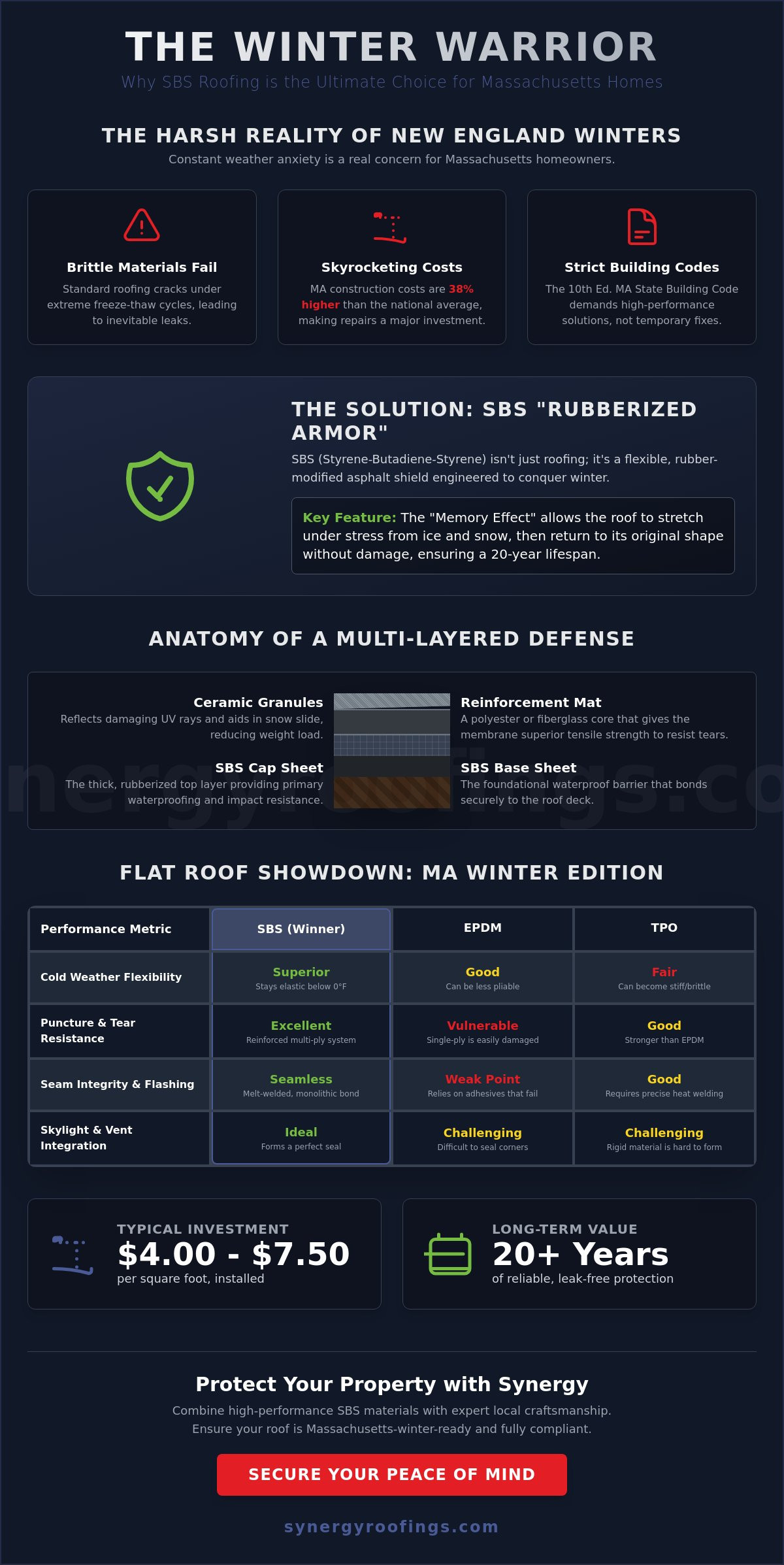
An SBS system isn’t just a single sheet; it’s a multi-layered defense strategy. It typically begins with a base sheet that provides the primary waterproof barrier. On top of that, we install a cap sheet which adds a thick layer of protection and durability. These sheets are reinforced with mats made of polyester or fiberglass, giving the roof the tensile strength it needs to resist tearing. The final surface is covered in ceramic granules. These granules aren’t just for aesthetics. They protect the underlying asphalt from UV damage and help snow slide off the roof more efficiently, reducing the risk of dangerous weight accumulation.
Why Massachusetts Low-Slope Roofs Fail in Winter
Flat or low-slope roofs in Norfolk County face immense pressure from heavy snow loads that can exceed 30 pounds per square foot during a severe storm. Typical materials often fail because they can’t handle the physics of thermal shock. When the sun warms the roof during the day and the temperature plummets at night, rigid materials snap and develop hairline cracks. These cracks become the entry points for water during the next snow melt. If you’ve already noticed damp spots on your ceiling or peeling paint, our Roof Leak Repair in Massachusetts guide can help you identify the next steps to take before the next blizzard hits. Choosing a rubberized system ensures your roof moves with the weather rather than fighting against it.
The Science of Flexibility: How SBS Resists Norfolk County Freeze-Thaw Cycles
Everything in your home moves. When the sun hits your low-slope roof in Quincy or Dedham, the temperature of the membrane can soar. At night, it drops. This cycle creates massive physical stress on the materials. The Science of Flexibility behind SBS roofing involves a high-elongation polymer that allows the asphalt to expand and contract in perfect harmony with your home’s structure. Unlike standard materials that fight against thermal movement, SBS works with it.
Forecasters for the 2026 winter season in Massachusetts anticipate a 15% increase in “flash-freeze” events. These are scenarios where melting snow quickly turns to ice. Standard roofing membranes often lack the elasticity to survive these rapid changes. SBS roofing systems for massachusetts winters provide the necessary “stretch” to prevent microscopic stress fractures. These tiny cracks are often invisible to the naked eye; however, they serve as the primary cause of leaks once the spring thaw arrives. By using a rubberized asphalt, we ensure your roof remains a seamless barrier against the elements.
Tackling the Freeze-Thaw Cycle
Water is a powerful force. When liquid water enters a tiny pore and freezes, it expands by about 9%. This expansion acts like a wedge, forcing materials apart and widening existing gaps. SBS membranes are engineered to mitigate this risk by maintaining a dense, rubberized seal that doesn’t allow water to penetrate the surface in the first place. Thermal shock is the rapid expansion and contraction of roofing materials caused by sudden temperature changes, which often leads to premature system failure in New England. Our multi-ply systems provide the thickness needed to absorb these shocks without losing integrity.
Snow Load Management for Flat Roofs
Norfolk County often sees “heavy” snow, which contains more water and weighs significantly more than “dry” powder. A single cubic foot of wet snow can weigh up to 20 pounds. SBS systems use a multi-ply approach to distribute this weight across the structural deck. While some homeowners consider metal roofing massachusetts for steeper pitches, SBS remains the superior choice for low-slope areas where weight and puncture resistance are paramount. High-quality underlayment is the backbone of this system, providing a secondary layer of protection that ensures your home stays dry. If you’re concerned about how your current roof is holding up, scheduling a professional roof inspection can provide the clarity you need before the first flake falls.
SBS vs. EPDM vs. TPO: Which Flat Roof System Wins in Massachusetts?
Choosing the right material for your low-slope roof often feels like a high-stakes gamble. You’re balancing upfront costs against the long-term threat of New England’s climate. When we compare EPDM, TPO, and SBS, we look at three specific criteria: winter durability, puncture resistance, and total lifespan. While EPDM rubber and TPO are popular in commercial settings, SBS roofing systems for massachusetts winters offer a level of “rubberized” resilience that single-ply membranes simply can’t match. It’s the difference between a single layer of protection and a multi-ply defense system.
EPDM is a common choice because it’s affordable, yet its single-ply nature makes it vulnerable. TPO is highly reflective, which helps in the summer, but it can become brittle and prone to cracking during the sub-zero snaps we often see in Norfolk County. SBS sits in the “sweet spot” for homeowners. It provides the flexibility of rubber with the thickness of traditional asphalt. This combination ensures your roof doesn’t just survive the winter; it thrives without the constant need for maintenance or the fear of hidden stress fractures.
Durability and Puncture Resistance
The most significant difference lies in the thickness of the material. A standard EPDM membrane is often only 45 to 60 mils thick, roughly the thickness of a nickel. SBS systems are multi-ply, often reaching a total thickness of 200 mils or more. This extra bulk is vital if your home has overhanging trees or if you need to walk on the roof to clear heavy snow. If you’re currently vetting contractors, our guide on roofers in massachusetts provides essential tips for finding a team that understands these technical differences. A thicker roof isn’t just about weight; it’s about the peace of mind that comes from knowing a fallen branch won’t lead to a midnight leak.
Seam Integrity and Installation Methods
Seams are where most flat roofs eventually fail. EPDM relies on adhesive tapes or glues that can break down over 15 to 20 years, especially when submerged under melting snow. SBS utilizes heat-welded or cold-applied seams that create a fused, monolithic bond. These fused seams are incredibly effective at preventing water backup caused by ice dams. For our clients in residential areas like Medway, we often recommend the “cold-applied” installation method. This process offers the same high-standard durability as heat-welding but without the use of open flames or heavy fumes. It’s a clean, professional way to ensure your property stays protected throughout the most demanding seasons.
Preventing Ice Dams and Leaks: Integrating SBS with Massachusetts Skylights
A skylight is often the most beautiful feature of a low-slope room; however, it’s also the #1 vulnerability during a heavy snow melt. When snow accumulates on a flat roof, the heat escaping from your home causes the bottom layer to melt. This water then pools against skylight curbs or chimneys, seeking any tiny gap in the flashing. Utilizing SBS roofing systems for massachusetts winters provides a significant advantage here because the material creates a fused, liquid-tight bond that rigid membranes simply can’t replicate. This rubberized asphalt doesn’t just sit against the curb; it integrates with it.
Proper skylight flashing prevents 90% of flat roof leaks by creating a permanent barrier at the junction where the roof meets the curb. We take this protection a step further by ensuring that chimney flashing is meticulously integrated into the multi-ply SBS system. Our craftsmen use a “tie-in” method that ensures the base sheet and cap sheet work together to direct water away from these critical areas. Even when water backs up behind a massive ice dam, it has no way to penetrate your home’s interior. This level of detail is how we ensure the integrity of your property for decades.
The Velux and SBS Connection
For low-slope applications, the choice between deck-mounted and curb-mounted skylights is critical. We typically recommend curb-mounted Velux units for SBS installations. This setup allows us to wrap the SBS membrane up and over the curb, creating a seamless “boot” that protects the opening. If you’re planning a project, our guide on Velux skylight installation in Medway provides the technical specifications you’ll need to ensure a successful outcome. Our team focuses on the synergy between the high-quality Velux product and our specialized installation techniques to provide you with total peace of mind. We don’t believe in shortcuts when it comes to your home’s most vulnerable points.
Ice Dam Mitigation Strategies
Ice dams are an inevitable reality in Norfolk County, but they don’t have to be a disaster for your home. The redundant layers of an SBS system act as a failsafe. If the top cap sheet is under immense pressure from standing water, the base sheet remains a secondary waterproof shield. To further protect your property, we often install high-performance cover boards and improved insulation during the roofing process. These components keep the roof surface colder, which reduces the initial snow melt that leads to damming in the first place. Local homeowners in Medway should also keep gutters clear and monitor snow depth to ensure the structural integrity of their flat roof sections. If you’re worried about a recurring leak around your skylight, don’t wait for the next storm to cause interior damage. You can schedule a leak-point inspection today to protect what matters most.
Professional SBS Installation: Protecting Your Property with Synergy
Choosing the highest quality SBS roofing systems for massachusetts winters is only the first step in safeguarding your home. The true strength of your roof comes from the “Synergy” between premium materials and elite local craftsmanship. At Synergy Roofing, we operate with a protection-first philosophy. This means we don’t just view your roof as a construction project; we see ourselves as a protective partner for your most valuable asset. Our goal is to provide a seamless transition from a state of concern about leaks to a state of total resolution and security.
Reliability in the New England climate requires a deep understanding of local regulations. As of July 1, 2025, the 10th edition of the Massachusetts State Building Code became the mandatory standard for all residential construction. This code, based on the 2021 International Building Code, includes specific requirements for underlayment and structural load-bearing capacity that are vital for flat roof sections. We ensure every installation we perform in Norfolk County meets or exceeds these 2026 standards. By following these rigorous guidelines, we guarantee that your roof restoration provides the long-term durability your family deserves.
The Synergy Roofing Process
Our project flow is designed to be steady and logical, keeping you informed at every stage. We start with a comprehensive technical assessment of your current roof deck. If we’re performing a winter replacement, we take extra precautions that most contractors overlook. For example, SBS membranes must be stored in heated environments at temperatures above 50°F until the moment of application to ensure the rubberized asphalt remains pliable and adheres correctly. We use on-site climate-controlled storage to maintain material integrity during the coldest January days.
- Preparation: We protect your landscaping and property with heavy-duty tarps and specialized equipment.
- Installation: Our craftsmen meticulously apply the base and cap sheets, focusing on the fused seams that prevent water backup.
- Mitigation: We pay special attention to chimney flashing and skylight tie-ins to eliminate common failure points.
- Final Walkthrough: We don’t leave until we’ve conducted a 50-point quality check and ensured the job site is cleaner than we found it.
Request Your 2026 Winter Readiness Inspection
Don’t wait for a record-breaking blizzard to discover a weakness in your flat roof. The weight of wet snow and the relentless freeze-thaw cycles of a Massachusetts winter can turn a minor hairline crack into a major interior emergency overnight. A professional assessment now can save you thousands in restoration costs later. We take pride in our blue-collar roots and our reputation as a trusted neighbor who provides honest, no-nonsense guidance. Take the first step toward protecting what matters most by securing a high-performance roof that’s built to last for decades. Contact Synergy Roofing for an SBS roofing estimate today and experience the peace of mind that comes with true professional protection.
Secure Your Home Before the First Frost
Protecting your property from the unpredictable Norfolk County climate requires more than a standard roof; it demands a system engineered for resilience. By choosing SBS roofing systems for massachusetts winters, you’ve moved from a state of worry to a position of strength. You now understand how the rubberized asphalt memory effect prevents fractures and how multi-ply thickness defends against heavy snow loads. You also know that a seamless bond around skylights is the only way to truly stop winter leaks.
At Synergy Roofing, we bring over 25 years of local roofing integrity to every project. As Velux Certified Specialists, we possess the specific expertise needed to handle the complex freeze-thaw cycles that define our region. We’re here to act as your protective partner, ensuring your most valuable asset remains dry and secure for decades. It’s about more than just construction; it’s about restoration and reliability.
Protect your home this winter with a durable SBS roofing system from Synergy Roofing. Don’t wait for a midnight emergency to upgrade your protection. Our team is ready to guide you toward a leak-free future and the long-term peace of mind you deserve.
Frequently Asked Questions
Is SBS roofing better than EPDM rubber for a home in Massachusetts?
SBS is often superior for residential low-slope areas because it’s a multi-ply system rather than a single sheet. While EPDM is a solid choice, the rubber-modified asphalt in SBS provides better puncture resistance and thicker protection against the heavy snow common in Norfolk County. It’s about building layers of security for your property to ensure total peace of mind throughout the season.
Can SBS roofing be installed in the middle of a Massachusetts winter?
Yes, we can install SBS roofing systems for massachusetts winters during the colder months by following strict temperature-controlled protocols. We keep all membranes in heated environments until the moment they’re applied to the roof deck. This professional approach ensures the adhesive bonds correctly even when the air temperature is low, allowing us to restore your protection without waiting for the spring thaw.
How long does an SBS roofing system typically last in New England?
A professionally installed SBS system typically lasts between 20 and 30 years in the New England climate. Its longevity is due to the unique memory effect of the polymers, which allow the material to expand and contract without cracking. This durability makes it a premier choice for homeowners looking for a long-term solution that survives decades of harsh freeze-thaw cycles and heavy ice accumulation.
Does an SBS roof require special maintenance to prevent ice dams?
SBS roofs don’t require special maintenance, but they do benefit from standard winter care like keeping gutters clear. Because the system is multi-layered and fused at the seams, it handles ice dam water backup better than almost any other material. We recommend a quick professional inspection every three years to ensure that the granule surface remains intact and that your drainage points are unobstructed.
What is the cost difference between SBS and standard asphalt shingles for low-slope roofs?
SBS is a more reliable investment for low-slope sections because standard asphalt shingles aren’t engineered for pitches below 2/12. While shingles might seem cheaper initially, they often fail on flat surfaces within five years. Choosing SBS prevents the stress of recurring leaks and protects your home’s structural integrity for 20 years or more, making it the most cost-effective long-term solution for flat sections.
Can I install Velux skylights on a flat SBS roof system?
Absolutely, Velux skylights are a perfect match for flat SBS systems when installed with a proper curb-mounted setup. We use the SBS membrane to wrap the curb, creating a seamless, waterproof boot that integrates the skylight into the roof’s armor. This specific technique eliminates the most common leak points found on low-slope residential additions and ensures your interior remains dry during heavy snow melts.
How does SBS roofing handle heavy snow loads compared to metal roofs?
SBS handles heavy snow loads exceptionally well because it distributes weight across multiple plies without the snow slide hazards associated with metal. On low-slope roofs, metal can sometimes struggle with ice damming at the eaves if not perfectly insulated. SBS remains a premier choice for flat sections because it provides a thick, cushioned barrier that resists punctures even if you need to use tools to clear snow.
Does SBS roofing have a strong odor during the installation process?
Modern SBS installation methods, especially cold-applied or self-adhered systems, have very minimal odor compared to old-fashioned hot tar roofs. You might notice a slight asphalt scent during the process, but it dissipates quickly once the project is complete. It’s a clean, professional process that respects your comfort while providing the high-standard protection your home needs to withstand the most demanding winter weather.