

Imagine waking up after a heavy Norfolk County snowstorm to find a slow, steady drip right where your porch roof meets the main house. It’s a frustratingly familiar scene for many local homeowners who struggle with traditional materials and need to explore low pitch roof replacement options that actually work. You likely already know that standard shingles often fail when the pitch isn’t steep enough to shed water quickly. It’s exhausting to worry about ice dams and recurring leaks every time the New England temperature fluctuates.
We believe your home should be a place of security, not a source of stress. This guide will help you navigate the most durable materials to ensure your property remains leak-free for 20 years or more. We’ll explore the latest 2026 Massachusetts building codes, including the R-49 insulation requirements and mandatory ice and water shields. You’ll learn why materials like TPO, which now holds 50 percent of the single-ply market, or standing seam metal are the gold standard for durability. We’re going to compare costs, aesthetic choices, and the specific installation techniques that turn a commercial-grade material into a beautiful, residential asset.
Key Takeaways
- Understand why standard shingles aren’t built for slopes below 2:12 and how choosing the right material prevents water from moving sideways into your home.
- Compare the best low pitch roof replacement options like TPO and PVC to find reflective, energy-efficient solutions that lower your summer cooling costs.
- Discover why standing seam metal is the premier 50-year choice for homeowners seeking a seamless aesthetic without the risk of exposed fasteners.
- Learn how proper R-49 insulation and the Synergy approach to drainage can finally eliminate the threat of ice dams during harsh Norfolk County winters.
- Identify how professional skylight integration and high-quality membranes work together to provide lasting peace of mind and protect what matters most.
Understanding Low Pitch Roofs: Why Standard Shingles Often Fail
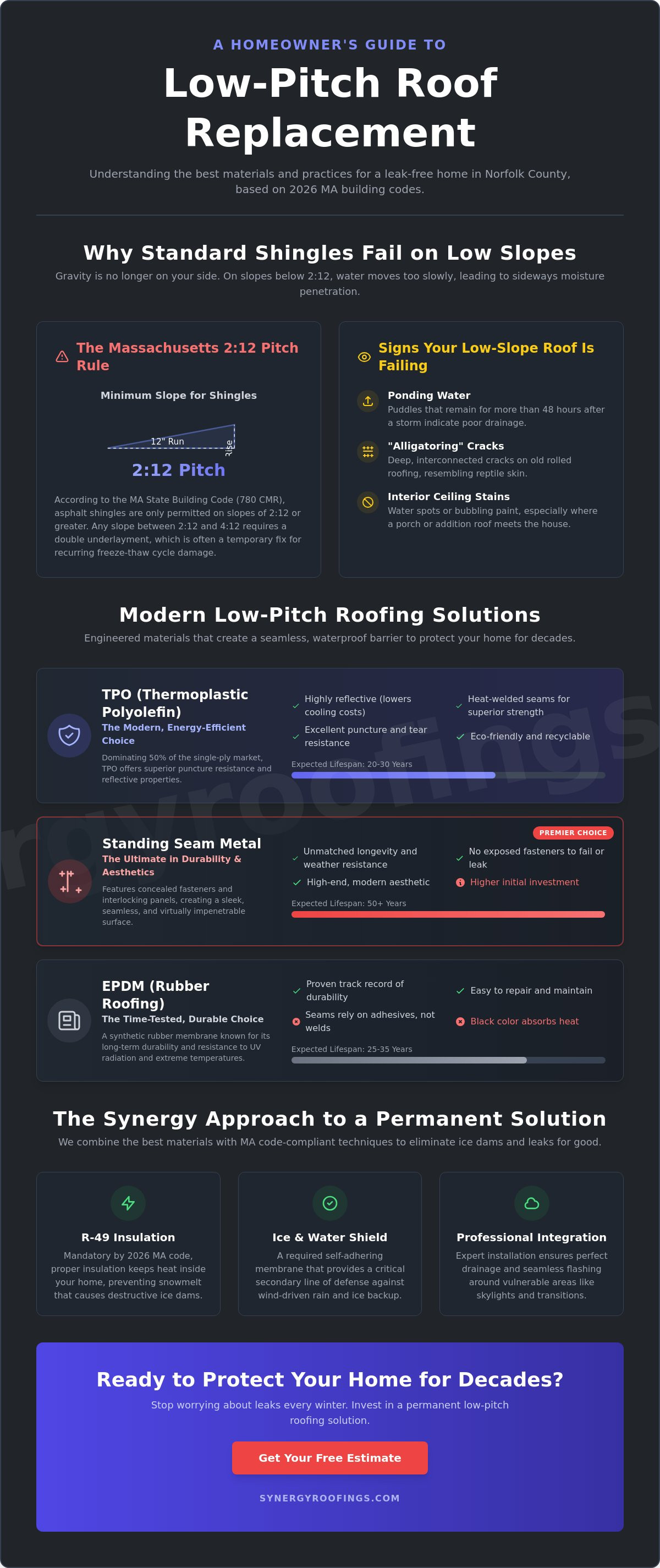
A low-pitch roof isn’t just a design choice; it’s a specific architectural challenge that requires specialized knowledge. In technical terms, we often categorize a Flat roof or low-slope structure as any surface with a pitch between 1:12 and 2:12. Roof pitch is the vertical rise over a 12-inch horizontal run. While steep roofs use the natural force of gravity to shed water quickly, low-pitch structures lack that momentum. This is why standard asphalt shingles often fail in these environments. They are designed to overlap like fish scales, relying on water to move downward. When the slope is too gentle, water lingers; surface tension can then pull moisture sideways or even upward under the shingles.
During intense Massachusetts rainstorms, wind can exacerbate this issue by pushing “back-water” into your roofing system. This is especially dangerous at transition zones where a steep roof meets a lower slope, such as an addition or a porch. These areas are the most common sites for leaks because water gains speed on the steep section and then pools abruptly when it hits the flatter surface. If you are researching low pitch roof replacement options, understanding these physical limitations is the first step toward a permanent solution.
To better understand this concept, watch this helpful video:
The 2:12 Rule for Asphalt Shingles
The Tenth Edition of the Massachusetts State Building Code (780 CMR) sets strict guidelines for material usage. Asphalt shingles are legally only permitted on roof slopes of 2:12 or greater. For any slope between 2:12 and 4:12, a double layer of underlayment is required by law to provide a secondary moisture barrier. However, we often find that this is a temporary fix rather than a long-term solution for homeowners. If your roof sits at the lower end of this spectrum, relying solely on shingles and underlayment increases the risk of moisture penetration during the freeze-thaw cycles common in Norfolk County.
Signs Your Current Low-Slope Roof is Failing
Identifying a failing roof before it damages your home’s interior is essential for protecting your investment. One of the most obvious signs is ponding water, which refers to puddles that remain on your roof for 48 hours or more after a storm. You should also watch for “alligatoring” on old rolled roofing, which appears as a series of deep cracks that resemble reptile skin. Inside your home, look for ceiling stains or bubbling paint specifically located at the base of roof transitions. These indicators suggest that your current system has reached its limit and it’s time to consider modern, more durable low pitch roof replacement options.
Membrane Roofing Options: PVC, TPO, EPDM, and SBS
When shingles are no longer a viable choice, membrane systems provide the seamless protection your home requires. These materials are specifically engineered to handle standing water and the intense weather cycles of the Northeast. As of 2026, TPO holds approximately 50 percent of the US commercial single-ply market, but it’s increasingly popular for residential additions due to its puncture resistance. Choosing between these low pitch roof replacement options involves balancing upfront costs with long-term energy savings and durability requirements.
Installation methods vary based on your roof’s structure. Fully adhered systems involve gluing the membrane directly to the insulation or cover board, which provides a clean look and high wind resistance. Mechanically fastened systems use heavy-duty screws and plates to secure the material. Both methods aim to create a watertight seal that protects your home’s interior from the “back-water” leaks discussed in the previous section. As noted in research by UMass Amherst on ice dam prevention, the thermal performance of your roofing material is a critical factor in preventing winter damage.
Rubber Roofing (EPDM) vs. Thermoplastics (TPO/PVC)
EPDM is a synthetic rubber membrane known for its incredible elasticity and resistance to hail. It’s a classic New England choice because it handles temperature swings without becoming brittle. TPO and PVC are white, reflective membranes that excel at reducing summer cooling costs. Unlike EPDM, which uses adhesive tape at the seams, TPO and PVC seams are heat-welded. This creates a monolithic layer that’s physically stronger than the material itself, offering superior peace of mind during heavy downpours.
SBS Roofing: The Rugged Alternative
While many contractors only suggest single-ply membranes, SBS Modified Bitumen is a powerhouse for residential low-slope areas. It’s a multi-layered system that uses bitumen modified with synthetic rubber for enhanced flexibility. This approach provides redundant leak protection; if the top layer is damaged, the base plies still keep water out. It’s particularly effective for high-traffic areas or balconies where puncture resistance is a priority. Our team can help you evaluate which of these Synergy Roofing services best aligns with your home’s structural needs and aesthetic goals.
Standing Seam Metal: The Premium Aesthetic Choice for Low Slopes
While membranes like TPO and EPDM offer excellent utility, standing seam metal is the premier choice for homeowners who want to combine extreme durability with high-end residential aesthetics. Among various low pitch roof replacement options, standing seam is unique because it uses raised interlocking seams that join above the water level. This design eliminates exposed fasteners, which are the primary failure point in traditional metal roofs. By hiding the screws beneath the metal panels, you create a continuous, watertight shield that can easily last 50 to 70 years with minimal maintenance.
Metal’s smooth surface provides a functional advantage during New England winters. It sheds snow much faster than granulated or rubber surfaces, preventing the heavy accumulation that leads to structural stress. When paired with Velux skylight installations, these systems create a modern, sleek profile that transforms the look of your home. You can find more information about various Low-Sloped Roofing Product Types through the Cool Roof Rating Council to see how metal stacks up against other high-performance materials. This synergy between light and protection is a hallmark of a well-designed modern roof.
Minimum Pitch for Metal Systems
It’s vital to understand that not all metal roofs are created equal. Massachusetts building codes are strict; you cannot install metal shingles on slopes below 3:12. For a standing seam system, the absolute floor is a 1:12 pitch. At this low slope, we always install a high-temperature ice and water shield underlayment. Since metal panels can reach temperatures exceeding 150 degrees in the summer, standard underlayment would degrade or stick to the metal. For a deeper dive into these technical requirements, you can review The 2026 Homeowner’s Guide to Metal Roofing.
Aesthetic and Resale Value
In Medway and surrounding Norfolk County neighborhoods, a standing seam roof is a significant upgrade that boosts curb appeal. Many homeowners choose “Cool Roof” coatings, which use infrared-reflective pigments to keep the home cooler. While the initial investment for metal is higher than membrane systems, the lifetime ROI is unmatched. Consider these benefits:
- Unmatched Lifespan: Metal lasts 2 to 3 times longer than asphalt or rubber.
- Energy Efficiency: Reflective coatings can reduce cooling costs by up to 25 percent.
- Superior Protection: Metal offers the highest rating for fire and wind resistance.
Choosing metal ensures your home remains protected while increasing its market value. It’s a “one-and-done” solution for the discerning homeowner.
Navigating Massachusetts Winters: Ice Dams and Drainage
Low-pitch roofs in Norfolk County face a unique set of challenges when the temperature drops. Unlike steep roofs that allow snow to slide off, low-slope structures act as “Ice Dam Magnets.” When heat from your living space escapes into the attic or roof cavity, it melts the bottom layer of snow sitting on your roof deck. This water trickles down to the colder eaves and freezes, creating a thick block of ice that prevents further drainage. As more snow melts, the trapped water pools behind this dam and eventually finds its way under your roofing material. This is why exploring specialized low pitch roof replacement options is vital for long-term protection.
The primary defense against this cycle is a cold roof deck. Following the Tenth Edition of the Massachusetts State Building Code, your home now requires a minimum of R-49 attic insulation. This high level of thermal resistance keeps your home’s heat inside where it belongs, preventing the roof surface from warming up enough to melt snow prematurely. If you notice large icicles forming frequently or water stains appearing on your ceiling during a thaw, you should contact us for professional roof leak repair to assess the integrity of your moisture barriers before the next storm hits.
Ice Dam Prevention Strategies
Modern building codes require an ice and water shield membrane to extend from the eave’s edge to at least 24 inches inside the interior wall line. This creates a waterproof seal that protects the most vulnerable parts of your structure. Stagnant air trapped within flat roof cavities often creates localized hot spots that contribute significantly to ice formation; therefore, proper ventilation or high-density insulation is a necessity. In some cases, we recommend installing self-regulating heat cables to maintain a clear drainage path through the ice during the most severe Norfolk County winters.
Drainage Solutions: Scuppers, Gutters, and Slopes
Ensuring positive drainage is the only way to prevent ponding water from damaging your new roof. For roofs that are perfectly flat, we utilize tapered insulation systems to create a slight slope where none exists, directing water toward scuppers or drains. This “built-in” pitch ensures that snowmelt doesn’t sit for 48 hours or more, which is a leading cause of membrane degradation. Once the water leaves the roof surface, it must have a clear path to the ground. Our specialized Gutter Installation services ensure that your drainage system is properly sized to handle the heavy volume of a New England spring thaw. If you’re ready to secure your home against the elements, contact our team today for a comprehensive drainage assessment.
The Synergy Approach to Low-Pitch Replacement
Selecting the right material from various low pitch roof replacement options is only half the battle. The other half is the installation process and the partnership you form with your contractor. At Synergy Roofing, we believe the best results come from a collaborative relationship between our team, the homeowner, and the high-quality materials we install. We call this the Synergy approach. It’s a three-step method—Assessment, Selection, and Execution—designed to move you from a state of worry about leaks to a state of total resolution. We take pride in our blue-collar roots while maintaining the modern standards required for 2026 construction.
Our process begins with an exhaustive assessment of your home’s current condition. We don’t just look at the surface; we examine the roof deck for integrity and check your attic’s insulation to ensure it meets the R-49 standard. This thoroughness allows us to recommend a solution that offers a leak-free home for 20 years or more. Whether we’re installing a single-ply membrane or a premium metal system, our goal is to provide the craftsmanship that protects what matters most to your family. We’ve served the Medway and Norfolk County communities for decades, and our reputation is built on being a dependable neighbor who happens to have specialized technical knowledge.
Skylights and Low Slopes
Low-pitch roofs present a unique challenge for natural lighting. Standard deck-mounted skylights often fail on slopes below 3:12 because water can’t shed fast enough around the frame. To ensure a watertight seal, we utilize curb-mounted skylights that raise the unit above the roof surface. As Velux specialists, we focus on integrated flashing kits that create a seamless transition between your new membrane and the glass. If you’re considering adding natural light to an addition or porch, you can learn more about our Velux Skylight Installation in Medway to see how we combine aesthetics with absolute protection.
Get Your Free Low-Slope Assessment
When you schedule an inspection with us, you won’t deal with a pushy sales pitch. You’ll receive a transparent, expert evaluation of your roofing system. We provide detailed estimates that break down the “why” behind every material choice, and we never include hidden fees for the specialized equipment required for low-slope work. Our team handles everything from the initial permit to the final gutter check, ensuring you have complete peace of mind throughout the project. It’s time to stop managing leaks and start enjoying a secure, energy-efficient home. Contact Synergy Roofing today to schedule your professional assessment and take the first step toward a permanent roofing solution.
Secure Your Home with a Long-Term Low-Slope Solution
Replacing a roof on a low slope requires more than just new materials; it demands a strategic approach to moisture management and thermal protection. You now understand why traditional shingles fail on gentle pitches and how modern membranes or standing seam metal provide a seamless barrier against the elements. By prioritizing high-performance low pitch roof replacement options and meeting the 2026 R-49 insulation standards, you can finally end the cycle of winter leaks and ice dams.
We believe every homeowner deserves a roof that performs without constant worry. As a 5-star rated local Medway contractor and Velux Certified Specialists, we possess the specific expertise required to manage the heavy snow load requirements of Norfolk County. We’re here to act as your protective partner, ensuring every transition and seal is crafted with total integrity. Protect your home with a specialized low-pitch roof from Synergy Roofing. Our team is ready to provide the peace of mind you deserve. Your home is your most valuable asset, and we’re committed to keeping it safe for the next 20 years and beyond.
Frequently Asked Questions
Can I install asphalt shingles on a flat or low-pitch roof?
Asphalt shingles are not permitted on roof slopes below 2:12 according to the Tenth Edition of the Massachusetts State Building Code. For slopes between 2:12 and 4:12, code requires a double layer of underlayment. If your roof is flatter than 2:12, you must choose specialized low pitch roof replacement options like TPO or EPDM to ensure the structure remains watertight.
How much more does a low-pitch roof replacement cost compared to shingles?
Low-slope systems generally cost more than standard shingles because the materials and labor are more specialized. For instance, TPO installation costs typically range from $5.50 to $9.00 per square foot as of 2026. While the initial investment is higher, these systems prevent the expensive structural rot that occurs when shingles fail on improper slopes.
What is the best material for a residential flat roof in Massachusetts?
TPO and standing seam metal are currently the most reliable choices for Massachusetts homeowners. TPO is favored for its heat-welded seams that create a single, waterproof sheet across your roof. Standing seam metal is the premium alternative, offering a lifespan of 50 to 70 years and the best resistance to the heavy snow loads common in Norfolk County.
Does a low-pitch roof require more maintenance?
Low-pitch roofs require more frequent inspections because gravity doesn’t clear debris as effectively as it does on steep slopes. Leaves and twigs can trap moisture, leading to organic growth or blocked drainage. We recommend a professional check at least twice a year to ensure water isn’t ponding and that your gutters remain clear.
Can I walk on my membrane roof to clean gutters?
You can walk on membrane roofs like TPO or PVC, but you should always wear soft-soled shoes and move carefully. While these materials are engineered for durability, dropping sharp tools or heavy equipment can cause punctures in the waterproof layer. If you’re uncomfortable navigating the surface, it’s best to work from a ladder or hire a professional.
How long does a rubber (EPDM) roof last in New England?
A professionally installed EPDM rubber roof typically lasts between 20 and 25 years in the New England climate. The material itself is highly durable, but the adhesive tape used at the seams is a common failure point over time. Many local homeowners are transitioning to TPO because its heat-welded seams offer a more permanent bond against freeze-thaw cycles.
Will a metal roof help with ice dams on my low-slope porch?
Standing seam metal is one of the most effective low pitch roof replacement options for preventing ice dams. Its smooth surface allows snow to slide off quickly before it has a chance to melt and refreeze at the eaves. Since there are no exposed fasteners to catch the ice, water moves freely into your gutters without backing up under the panels.
What happens if water ponds on my low-pitch roof?
Ponding water that stays on your roof for more than 48 hours can cause the roofing membrane to degrade and eventually leak. The weight of standing water also puts unnecessary stress on your roof deck and structural supports. If you see persistent puddles, we often recommend installing tapered insulation to create a slight slope that directs water toward your drainage system.