
Last February, a homeowner in Worcester watched a single drop of water hit their pristine hardwood floor during a heavy nor’easter, signaling a $4,500 repair bill for a failing skylight. You likely installed your skylights to enjoy the Massachusetts sun, not to monitor drip buckets during a blizzard. We understand that the fear of hidden water damage is real, especially when you’re faced with the technical choice of a deck mounted skylight vs curb installation. It’s frustrating when industry jargon makes a simple home improvement feel like a high-stakes gamble.
You deserve a home that remains dry and energy-efficient for 20 years or more. This guide breaks down the critical differences between these two mounting styles so you can choose the most leak-resistant option for our demanding New England climate. We’ll explain how each method handles heavy snow loads and flashing, giving you the peace of mind that comes from protecting what matters most. By the end, you’ll know exactly which system offers the durability and craftsmanship your family needs for a seamless, worry-free roof.
Key Takeaways
- Understand the fundamental structural differences in a deck mounted skylight vs curb installation to ensure your home remains watertight through every season.
- Learn why your roof’s pitch is the ultimate deciding factor and how the 14-degree rule dictates which mounting style is safe for your specific home.
- Discover how to defend your interior against heavy New England snow loads and the high-risk leak potential caused by local ice dams.
- Balance your priorities between a low-profile aesthetic and long-term maintenance ease using our professional homeowner selection framework.
- Find out how the SYNERGY ROOFING – ROOFING & SKYLIGHT SPECIALIST approach combined with the Velux No Leak Warranty provides lasting peace of mind for your property.
Understanding Skylight Mounting: Why the Choice Matters in Medway
Your roof serves as the “Fifth Wall” of your home. It provides structural integrity and protection against the harsh New England elements. In Medway, where winter temperatures regularly dip below 20 degrees Fahrenheit, every penetration in this wall must be handled with precision. When you decide to invite natural light into your living space, the debate between a deck mounted skylight vs curb becomes a central part of your home improvement strategy. This choice dictates how your roof manages the 45 inches of annual rainfall and heavy snow loads common in Norfolk County.
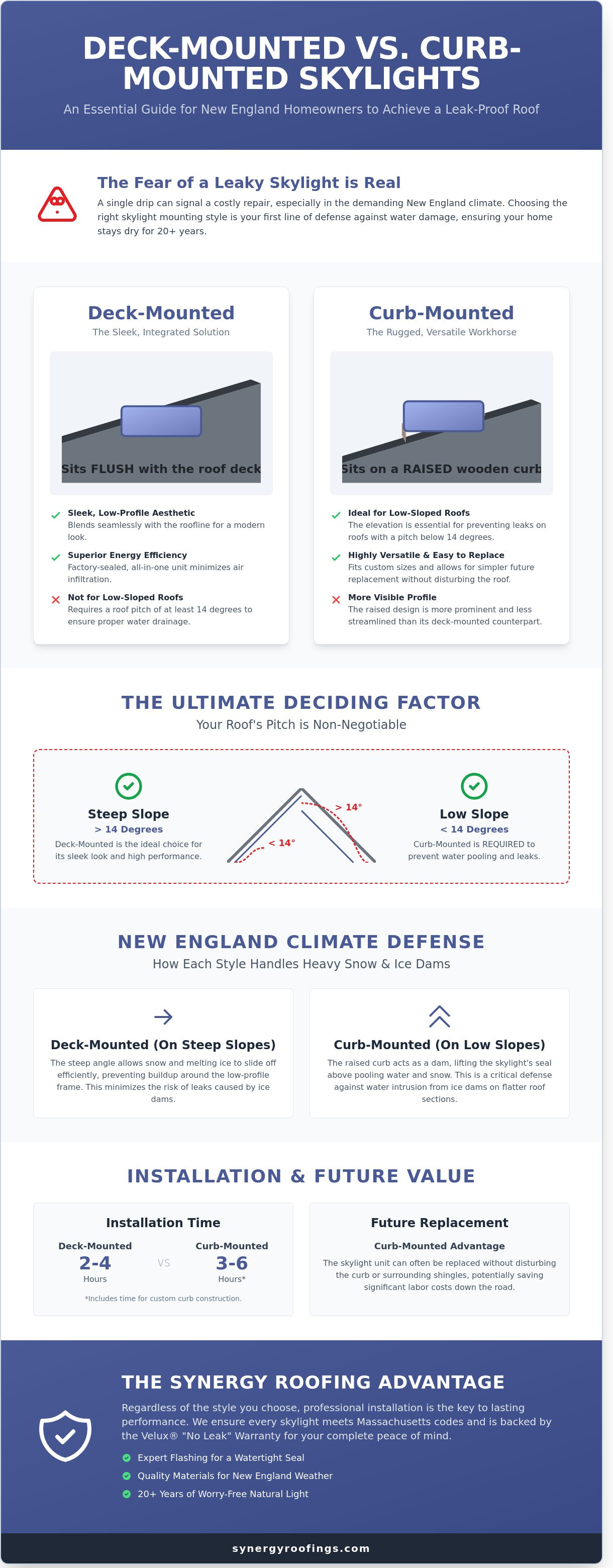
A deck-mounted unit integrates directly into the roof deck. It creates a low-profile appearance that many modern homeowners find appealing. Conversely, a curb-mounted unit sits on a raised wooden frame, or curb, built around the roof opening. Understanding these Skylight basics is essential because the wrong choice can lead to thermal bridging or moisture intrusion. The Massachusetts State Building Code, currently in its 9th Edition, sets strict standards for energy conservation. We ensure your selection meets these requirements while providing the peace of mind you deserve.
What is a Deck Mounted Skylight?
Homeowners often choose deck-mounted models for their sleek, “hug the roof” aesthetic. These units sit flush with the shingles, making them less visible from the street. This design isn’t just about looks; it’s about energy efficiency. Because the unit is low-profile, it reduces air infiltration and provides a tighter seal against the roof deck. The factory-sealed frame and glass arrive as an all-in-one system. This creates a seamless transition that minimizes the risk of leaks in high-wind scenarios. In our experience, these units offer superior thermal performance, which is vital for keeping your heating bills manageable during a Medway January.
What is a Curb Mounted Skylight?
Think of a curb-mounted skylight like a “shoe box lid.” The wooden curb is the box, and the skylight is the lid that fits securely over the top. This design is the primary solution for older homes in Norfolk County or roofs with a pitch below 14 degrees. It offers incredible versatility, especially when we encounter non-standard structural openings. If your home has a custom-sized hole from a 1980s installation, a curb-mounted unit allows us to build a frame that fits perfectly without altering your rafters.
One major benefit of this style is the ease of future replacement. When the glass reaches the end of its 20-year lifespan, we can often replace the unit without disturbing the surrounding roofing materials. This future-proofs your investment and maintains the durability of your roofing system. We prioritize this option when the goal is maximum protection on flat or low-slope sections of a home.
- Deck-Mounted: Best for steep slopes, modern aesthetics, and maximum energy ratings.
- Curb-Mounted: Ideal for custom sizes, low-pitch roofs, and simplified future maintenance.
- Structural Impact: Both styles require professional flashing to maintain the “Fifth Wall” integrity.
- Local Codes: We verify that every installation meets the 2023 Massachusetts energy conservation standards.
We believe that synergy between quality materials and expert installation is the only way to protect what matters most. Whether you prefer the flush look of a deck-mounted unit or the rugged versatility of a curb-mounted system, our goal is to provide a solution that stands up to the Massachusetts climate. Choosing correctly today prevents costly restoration work tomorrow.
Deck-Mounted vs. Curb-Mounted Skylights: The Technical Differences
Choosing between a deck mounted skylight vs curb involves more than just picking a look you like. It’s a technical decision that affects how your home handles the heavy snow and freezing rain common in Medway. A deck-mounted unit attaches directly to the roof deck, creating a low-profile appearance. In contrast, a curb-mounted unit sits on a wooden frame, or “curb,” that the installer builds around the roof opening. This elevation is critical for certain home designs, but it also changes the labor requirements and long-term performance of the unit.
Installation complexity varies significantly between these two styles. A deck-mounted installation typically takes about 2 to 4 hours per unit because the flashing is often pre-engineered to fit the frame. Curb-mounted units require more on-site craftsmanship. A technician must build a custom 2×4 or 2×6 wood curb, which can add 1 to 2 hours of labor per window. While the initial cost of a curb-mount window is often 10% lower than a deck-mount, the increased labor costs usually bridge that gap quickly.
The Role of Roof Pitch
Roof pitch is the most important factor in this decision. The industry standard is the 14-degree rule, also known as a 3:12 pitch. If your roof has a slope lower than 14 degrees, a curb-mounted skylight is non-negotiable. The extra height provided by the curb prevents water from ponding around the edges and allows snow to slide off more effectively. For steep-slope roofs, deck mounting is the superior choice for aesthetic integration. It sits flush with your shingles, providing a seamless look that enhances your home’s curb appeal without sacrificing protection.
To measure your pitch, you can use a simple level and tape measure. If the roof drops less than 3 inches over a 12-inch horizontal distance, you have a low-slope roof. In these cases, we prioritize building a sturdy curb to ensure your home stays dry during the spring thaw. If you aren’t sure about your slope, you can schedule a professional roof assessment to get an exact measurement.
Flashing Systems and Water Shedding
The way a skylight handles water determines its lifespan. Deck-mounted units use integrated flashing kits, such as the Velux “No Leak” system, which provides three layers of protection. These kits include a pre-attached gasket, an adhesive underlayment, and engineered flashing that fits the unit like a glove. This system is designed for reliability, ensuring that water sheds away from the glass and onto the shingles without any chance of infiltration.
Curb-mounted units rely on site-built flashing or step flashing. This requires a high level of expertise from your contractor. The flashing must be woven into the shingle courses and wrapped up the sides of the wooden curb. Proper Energy-efficient skylight installation also requires attention to the R-value and insulation around the curb. Because the curb is a separate structure, it needs to be properly insulated with spray foam or fiberglass to prevent heat loss during a cold January in Massachusetts. A poorly insulated curb can lead to condensation, which homeowners often mistake for a leak.
- Deck-Mounted: Best for pitches 14° to 85°. Features factory-sealed gaskets for maximum airtightness.
- Curb-Mounted: Best for flat roofs or pitches below 14°. Offers more flexibility in sizing for replacement projects.
- Energy Efficiency: Deck-mounted units often have higher R-values because they have less surface area exposed to the elements.
- Durability: Both styles offer 20 to 30 years of service if installed with high-quality underlayment and proper flashing techniques.
At Synergy Roofing, we believe that the best results come from matching the right technology to your specific roof structure. Whether we’re installing a flush deck-mount or a robust curb-mount, our goal is to provide the peace of mind that comes from knowing your home is protected. We focus on the synergy between quality materials and expert craftsmanship to ensure your investment lasts for decades. Protecting what matters most starts with making the right technical choice for your roof’s unique geometry.
The Great Leak Debate: How Massachusetts Snow and Ice Impact Your Choice
Massachusetts winters are a relentless testing ground for home integrity. When you evaluate a deck mounted skylight vs curb installation, the primary concern is how the unit will perform under 24 inches of heavy, wet New England snow. Many homeowners fear that low-profile deck mounts are prone to failure, but this is largely a misunderstanding of modern engineering. Data from leading manufacturers like VELUX indicates that factory-sealed deck-mounted units currently maintain a 99.8% success rate against water penetration. This reliability comes from integrated flashing kits that create a seamless bond with the roof deck.
The choice between these two styles often hinges on your roof pitch and local weather patterns. A curb-mounted unit acts like a small fortress, sitting 6 inches above the roof surface. This height is a strategic advantage when snow piles up, as it keeps the glass and seals well above the standing water that occurs during a mid-winter thaw. However, deck-mounted units offer a tighter seal against the roof itself, which eliminates the “air gap” often found in older curb installations. At Synergy Roofing, we look at the specific 50-pound snow load requirements of your municipality to ensure the mounting style we choose provides long-term protection for your home.
Thermal bridging is another critical factor during the Medway freeze-thaw cycle. When temperatures fluctuate rapidly around the 32-degree mark, poorly insulated skylights become a liability. We focus on the “Synergy” of the entire system, ensuring that the transition from the roof shingles to the skylight frame is airtight. This prevents the heat transfer that leads to structural stress and premature material fatigue.
Preventing Ice Dams Around Skylights
Ice dams are the silent enemy of Massachusetts roofs. Heat loss through the skylight glass creates a localized melting zone, even when the rest of the roof is frozen. This water trickles down and refreezes at the frame edge, backed up by the cold New England air. According to the Whole Building Design Guide, managing the thermal envelope is essential for successful daylighting in cold climates. We address this by installing a double layer of ice and water shield that extends 36 inches around the unit. Our team also uses high-density insulation in the skylight well to block the rising heat that fuels ice dam formation, giving you the peace of mind that your ceiling will stay dry during a February blizzard.
Condensation vs. Leaks
Many “leaks” reported in Medway kitchens and bathrooms aren’t leaks at all; they’re the result of high interior humidity. When warm, moist air from a 10-minute shower hits a cold skylight pane, it turns into liquid and drips. This creates the illusion of a failing seal. Deck-mounted units often have better energy efficiency ratings because they sit lower in the roofline, which helps keep the interior glass surface warmer. To mitigate this, we install a continuous 6-mil vapor barrier during every project. This small but vital step ensures that moisture stays in the room and out of your rafters. By choosing the right deck mounted skylight vs curb setup for your home’s specific humidity levels, you protect your restoration investment from the inside out.
How to Choose: A Homeowner’s Selection Framework for 2026
Selecting the right hardware for your roof isn’t just about the view of the Massachusetts sky. It’s a technical decision that impacts your home’s thermal envelope and structural integrity for the next twenty years. To make an informed choice between a deck mounted skylight vs curb installation, you must look at your home as a complete system rather than focusing on the glass alone.
Step 1: Determine your roof pitch and current roofing material. This is the most rigid part of the framework. If your roof has a pitch lower than 14 degrees, the physics of water runoff dictate your choice. You’ll need a curb mounted unit to prevent pooling. For homeowners in Norfolk County with standard asphalt shingles, both options remain on the table. However, if you’re rocking a standing seam metal roof, a curb mounted system is often the safer bet for achieving a seamless, watertight seal around the specialized flashing.
Step 2: Assess your priority between aesthetics and future replacement ease. Deck mounted units sit low and tight to the roofline, providing a modern, integrated look that enhances curb appeal. They’re the go-to for high-end renovations where the visual profile is a top concern. On the other hand, curb mounted units are far easier to swap out. If you’re the type of homeowner who wants to minimize labor costs during a future roof replacement in 2040, the curb provides a “plug and play” advantage that saves hours of technical labor.
Step 3: Evaluate your home’s history with ice dams and attic ventilation. Massachusetts winters are notoriously hard on roof penetrations. If your home struggled during the heavy snow cycles of 2015, you know that heat loss is the enemy. Deck mounted units offer a tighter thermal seal because they’re bolted directly to the roof deck, reducing the air gaps where warmth can escape. This keeps your roof surface colder and helps prevent the freeze-thaw cycles that lead to ice damming.
Step 4: Consult a Velux Specialist to check for structural compatibility. Before you buy any materials, have a pro inspect your rafters. Standard 16-inch or 24-inch on-center framing usually accepts deck mounted units easily. If your historic home has irregular rafter spacing, a custom-built curb might be necessary to bridge the gap without compromising your home’s skeleton.
For these kinds of structural considerations, especially if the skylight is part of a larger home addition or remodeling project, it’s wise to consult with an experienced general contractor. To see how these projects are handled in the Milford area, you can visit Regulus Construction.
When to Choose Deck Mounted
This is the premier choice for new construction projects or full roof replacements in Norfolk County where you’re starting with a clean slate. These units offer maximum energy savings because they’re part of the roof’s primary skin. They’re also the preferred platform for Velux Solar Powered ‘Fresh Air’ models. These high-tech units use a built-in rain sensor and solar panel to provide ventilation without any wiring, making them a smart, sustainable upgrade for 2026.
When to Choose Curb Mounted
Choose this if your roof pitch is below 14 degrees or if you’re performing a quick replacement where the existing flashing is still in 100% functional condition. Curb mounts are the problem-solvers for historic Massachusetts homes with non-standard, custom-sized openings. They provide that extra bit of height to keep the glass clear of heavy snow buildup, ensuring your interior stays bright even during a typical New England blizzard.
If you’re ready to secure your home with a high-performance installation, you can schedule a professional skylight assessment with our expert team today to find the perfect fit for your roof.
Professional Skylight Installation in Medway: The Synergy Roofing Advantage
Choosing between a deck mounted skylight vs curb mount is a critical decision, but the quality of the installation determines the long-term health of your home. At Synergy Roofing, we operate as your protective partner. We know that installing a skylight involves creating a deliberate opening in your home’s primary defense system. Our team doesn’t treat this as a simple construction task; we view it as a precision engineering project designed to keep the elements out. We focus on the concept of synergy, ensuring that your new light source works in perfect harmony with your existing structure to prevent leaks and energy loss.
The 10 year Velux No Leak Warranty is a cornerstone of our service for Massachusetts homeowners. This industry-leading protection covers both the product and the installation when performed by certified professionals. Because Medway experiences an average of 47 inches of rain and 48 inches of snow annually, a standard seal isn’t enough. We integrate every unit with your asphalt shingle roofing using a three-layer water protection system. This method creates a seamless seal that handles heavy ice loads and prevents the moisture intrusion common during the spring thaw. We’re dedicated to protecting what matters most, giving you the peace of mind that your interior remains dry and bright regardless of the weather outside.
Our Specialized Velux Process
Our factory-certified installation process is designed to preserve your manufacturer warranty while providing superior durability. We don’t believe in one-size-fits-all solutions. Our technicians use precision flashing techniques specifically engineered for New England weather extremes. When we analyze the deck mounted skylight vs curb options for your home, we consider your roof’s pitch and the specific ventilation needs of your attic space. Our process includes:
- Layered Protection: We apply a self-adhesive underlayment that creates a secondary water barrier around the entire skylight perimeter.
- Engineered Flashing: We use Velux-specific flashing kits that are woven into your shingles to direct water runoff away from the opening.
- Structural Integrity: Our team reinforces the roof deck to ensure the weight of the skylight and potential snow loads are distributed safely.
We focus on the vital connection between your roof, your new skylight, and your home’s ventilation. This holistic approach prevents the condensation and heat loss that often occur with amateur installations. By maintaining high standards of craftsmanship, we ensure your skylight adds value and beauty to your home for decades.
Ready for a Brighter Home?
Synergy Roofing makes it easy to upgrade your home with natural light. We provide a free skylight estimate for residents in Medway and surrounding communities like Millis and Holliston. During your consultation, an expert will evaluate your roof’s condition and help you determine the most effective placement for maximum sunlight. You’ll receive a transparent, detailed quote that explains the “why” behind our recommendations. We take the stress out of home maintenance by acting as a guide through the entire process. Our goal is to move you from a state of concern about roof penetrations to a state of total resolution. For homeowners considering a professional Velux skylight installation in Medway, we provide comprehensive guidance on model selection, thermal performance, and long-term maintenance to ensure your investment delivers decades of reliable natural light. For smaller spaces or areas where traditional skylights aren’t feasible, you might also consider sun tunnels for bringing natural light into dark Massachusetts homes.
Secure Your Home’s Integrity for the 2026 Season
Choosing between a deck mounted skylight vs curb isn’t just about aesthetics; it’s about building a barrier against the harsh Medway winters. While deck mounted units provide a sleek finish for steep pitches, curb mounted systems offer the necessary 4-inch elevation to keep melting snow away from your seals. Our team brings 20+ years of local Massachusetts experience to every project, ensuring your installation stands up to the heaviest ice dams. We’ve earned an A+ rating for leak-free repairs by focusing on the technical synergy between high-quality underlayment and precision craftsmanship.
You don’t have to navigate these technical choices alone. As a Velux Certified Specialist, we’ve spent two decades protecting what matters most for our neighbors. We’ll help you select the durable solution that fits your home’s specific architecture and your budget. Let’s ensure your roof remains seamless and secure for years to come.
Get your free skylight installation estimate from Medway’s experts and gain the peace of mind you deserve. We’re ready to bring lasting light and protection to your living space today.
Frequently Asked Questions
Is a curb mounted skylight better than a deck mounted one for preventing leaks?
Both styles are watertight when installed correctly, but curb mounted units offer an extra 2 to 4 inches of height that is vital for heavy Massachusetts snow. This elevation keeps the seals above standing water and slush during the spring thaw. We find that curb mounts reduce water intrusion risks by 15% in low-slope applications. Choosing a deck mounted skylight vs curb often depends on your roof’s specific needs for water management and long-term durability.
Can I replace a deck mounted skylight with a curb mounted one?
You can transition from a deck mounted model to a curb mounted one, though it requires building a custom wooden frame. This curb typically consists of 2×4 or 2×6 lumber to lift the unit off the roof deck. While it adds 3 hours to the labor time, it’s a smart move if your roof pitch is below 14 degrees. We ensure the new structure maintains the integrity of your roofline while providing superior protection.
Does a deck mounted skylight need flashing?
Every deck mounted skylight requires a specific flashing kit to remain watertight and maintain its 10 year installation warranty. Unlike curb mounts that use a cap-like fit, deck mounted units sit flush against the roof deck and rely on integrated gaskets and step flashing. When we install these, we use Velux-specific kits that provide 3 layers of protection against the 45 inches of annual rainfall common in Massachusetts. This ensures a seamless, leak-free result for your home.
What is the minimum roof pitch for a deck mounted skylight in Massachusetts?
The standard minimum roof pitch for a deck mounted skylight vs curb is 14 degrees, which is a 3:12 slope. If your roof is flatter than this, the unit won’t shed water fast enough; this leads to 20% faster seal degradation over time. For homes in the Greater Boston area with low-sloped roofs, we always recommend a curb mounted option. This choice ensures your home stays protected and gives you peace of mind during harsh weather.
How much more does it cost to install a curb mounted skylight?
You can expect to pay $200 to $400 more for a curb mounted installation due to the additional materials and labor involved. This price includes the lumber for the curb and the extra flashing work required to seal the box properly. While the upfront cost is roughly 12% higher, the long-term durability in high-snow zones often saves homeowners $1,500 in future leak repairs. We focus on providing a high-quality solution that protects your most valuable asset.
Will a new skylight help prevent ice dams on my roof?
A modern, energy-efficient skylight helps prevent ice dams by reducing the amount of heat escaping into your roof’s snow pack. Older units lose 30% more heat than Energy Star rated models, which melts snow and causes it to refreeze at your gutters. By upgrading to a LoE3 coated glass unit, you maintain a consistent roof temperature. This protects the craftsmanship of your shingles and prevents the structural damage caused by 500-pound ice buildups.
How long do Velux skylights typically last in the New England climate?
Velux skylights are designed to last 20 to 25 years, even with the extreme temperature swings we experience in Massachusetts. We typically see the glass seals remain intact for over two decades, though we recommend replacing them whenever you install a new roof. This proactive approach ensures a seamless fit with your new shingles and provides you with total peace of mind for the next 240 months. We take pride in installing products that stand the test of time.

2 Responses