
What if that tiny, persistent drip near your fireplace is actually a warning sign for a major structural disaster? If you’ve noticed water stains on your ceiling or damp bricks in the attic, you aren’t alone. Many homeowners feel a sense of dread when they see signs of a leak, fearing they’ll be overcharged for a temporary fix that doesn’t last. We understand that your home is your most significant priority, and you deserve a protective partner who provides clear, honest answers. Understanding the chimney flashing repair cost massachusetts residents face in 2026 is the first step toward securing your property against our state’s unforgiving freeze-thaw cycles.
We’ve designed this guide to replace your confusion with confidence. You’ll discover the real-world factors that influence pricing, from the durability of copper versus galvanized steel to the specific requirements of the Massachusetts State Building Code. We will preview the different repair methods, explain why local regulations mandate a flashing thickness of at least 0.019 inches, and show you how to identify a reliable contractor with the proper HIC registration. By the end of this article, you’ll have a straightforward roadmap for restoring your roof’s defenses and finding long-term peace of mind.
Key Takeaways
- Learn why multi-layered flashing is the most vital defense your home has against the relentless New England weather.
- Gain a transparent look at the chimney flashing repair cost massachusetts residents face, covering everything from simple resealing to complex masonry work.
- Identify how the height and pitch of your roof influence the safety equipment and time needed to complete a high-quality repair.
- Recognize the subtle indicators of failure, like rust or damp bricks, so you can act with urgency before leaks cause internal damage.
- Understand the value of partnering with specialists who use premium materials designed specifically for our local climate.
The Role of Chimney Flashing in Massachusetts Homes
Your chimney is essentially a giant hole in your roof’s defense system. Without a robust, watertight seal, every rainstorm or Nor’easter poses a direct threat to your home’s structural integrity. This is where Flashing (weatherproofing) comes into play. It’s a multi-layered metal system specifically designed to bridge the gap between your masonry chimney and your roofing materials. In Massachusetts, this system isn’t just a recommendation; it’s a critical necessity to prevent wood rot and interior ceiling damage.
Many homeowners focus solely on the brick and mortar, but the real protection happens where the shingles meet the masonry. When you start researching the chimney flashing repair cost massachusetts professionals quote, you’re really looking at the price of precision. A failure in just one layer of this system allows water to seep behind your walls. This moisture often remains hidden until the damage becomes an expensive, structural emergency. We view flashing as a primary guardian of your home’s interior, requiring specialized roofing expertise to install correctly.
To better understand how these metal layers work together to protect your home, watch this helpful video:
Why Massachusetts Weather is Brutal on Flashing
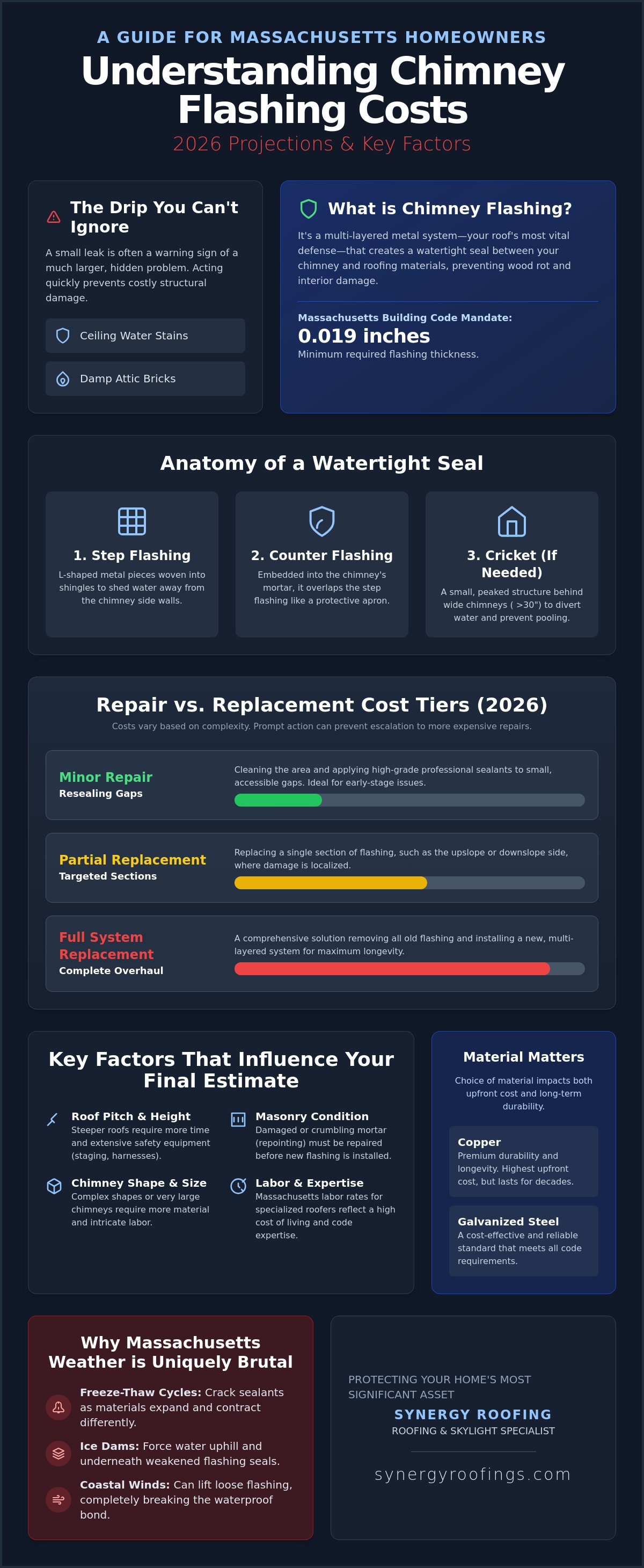
Our local climate is uniquely aggressive toward exterior building materials. The freeze-thaw cycle is a constant battle; since metal and masonry expand and contract at different rates, the sealant between them can easily crack. Ice dams are another major concern in the Bay State. When snow melts and refreezes at your eaves, it backs up water behind the chimney, forcing moisture under weakened seals. If you live in coastal areas like Norfolk County, high winds can actually lift loose flashing, breaking the waterproof bond completely.
The Anatomy of a Watertight Seal
A professional roofing specialist looks at flashing as a three-part harmony. First, step flashing involves individual L-shaped metal pieces woven into your asphalt shingles to shed water. Next, counter flashing is embedded into the chimney’s mortar joints, hanging over the step flashing like a protective apron. Finally, for chimneys wider than 30 inches, we often recommend a cricket installation. This is a small, peaked roof structure built behind the chimney to divert water and snow away from the back wall, preventing the pooling that leads to leaks.
Estimating Chimney Flashing Repair & Replacement Costs in 2026
Labor and material inflation have reshaped the 2026 home maintenance market. When you look at the chimney flashing repair cost massachusetts homeowners are currently quoted, you’ll see that labor accounts for a significant portion of the total. Massachusetts labor rates for specialized roofing professionals sit at the higher end of the national average. This reflects our state’s high cost of living and the specialized expertise needed to meet the Massachusetts State Building Code (780 CMR). We believe in transparency, so it’s vital to understand that your final estimate isn’t just a random number; it’s a reflection of local safety standards and material quality.
The complexity of your chimney’s shape and its location on your roof directly dictates the hours required for a project. If your roof has a steep pitch or requires extensive staging for safety, these logistical needs will influence the final investment. You’re not just paying for metal; you’re paying for a secure, dry home. If you suspect a leak, acting quickly can prevent the need for more expensive structural repairs down the road. You can reach out to our team for a professional assessment of your roof’s current condition.
Average Repair vs. Full Replacement Costs
Minor repairs are often the most cost-effective path if caught early. This usually involves cleaning the area and applying high-grade professional sealants to small gaps. A partial replacement is more involved, focusing on just the upslope or downslope side of the masonry. However, a full system replacement is the most secure option for aging homes. This process involves the total removal of old metal, masonry cutting to create new reglets, and the installation of a completely new three-part system. While a full replacement represents a more significant investment, it provides the psychological relief of knowing your home is sealed for decades.
Material Costs: Aluminum, Steel, and Copper
Your choice of metal impacts both the immediate price and the longevity of the seal. Aluminum is the most common choice in our area because it’s lightweight and naturally rust-resistant. Galvanized steel is a durable, budget-friendly alternative, though it can eventually corrode if the protective coating fails over time. For those seeking the “gold standard,” copper is the preferred material. Copper flashing can last 50 years or more in the harsh New England climate, developing a beautiful patina while remaining completely watertight. Regardless of the material, we ensure all installations meet the state requirement of at least 0.019 inches in thickness for rust-resistant flashing.
Seasonality also plays a role in your project’s timing. Emergency repairs during the snowy winter months often incur additional service fees due to the increased risk and difficulty of clearing ice from the work area. Planning your maintenance during the spring or fall allows for a more predictable schedule and ensures your home is ready before the next big storm hits.
Key Factors That Influence Your Final Estimate
No two chimneys are exactly alike. While we can provide general market ranges, the specific architecture of your home determines the final chimney flashing repair cost massachusetts residents will pay. We approach every estimate with a focus on longevity, ensuring the solution matches the unique challenges of your property. Our goal is to move you from a state of concern about a leak to a state of resolution, knowing your most valuable asset is protected by expert craftsmanship.
The complexity of the project is often dictated by the physical layout of your roof. For example, if your home has multiple chimneys, servicing them during a single visit often provides better overall value. We can streamline the staging and material delivery, which reduces the total labor hours compared to scheduling two separate appointments. This collaborative approach between our experts and your maintenance priorities ensures the best possible outcome for your home’s safety.
Chimney Size and Roof Pitch
The physical dimensions of your chimney are the most obvious cost drivers. A large, multi-flue chimney requires significantly more linear feet of metal and a higher number of precise masonry cuts than a standard single-flue structure. Beyond size, the angle of your roof plays a massive role in the complexity of the job. Steep-slope roofs require our team to use specialized harness systems and safety anchors. This isn’t just about safety; it’s about the speed of the work. Movement on a steep pitch is naturally slower and more deliberate. Additionally, chimneys located at the roof eaves are often more difficult to seal than those sitting at the ridge because they must handle a higher volume of water runoff and are more prone to ice dam pressure.
Labor, Accessibility, and Hidden Damage
In the 2026 market, labor accounts for roughly 60-70% of the total project cost. This reflects the high level of craftsmanship required to integrate metal into masonry correctly. Accessibility is another factor that can shift the scale. Multi-story homes often require longer ladders or complex scaffolding systems, which increases the initial setup time. Perhaps the most critical variable is the condition of what lies beneath. When we remove old, rusted flashing, we sometimes discover rotted plywood or damaged roof decking. Replacing these materials is essential for a permanent fix, but it does expand the scope of the project. We pride ourselves on being transparent guides; if we find hidden damage, we’ll explain exactly why it needs attention to safeguard your home.
Warning Signs: When to Call a Massachusetts Roofing Specialist
Identifying a problem early is the best way to manage the chimney flashing repair cost massachusetts homeowners eventually face. If you wait until a puddle forms on your floor, the damage has already moved deep into your home’s structure. The most common indicator is a yellow or brown water stain on the ceiling surrounding the chimney breast. These spots often grow larger after a storm, signaling that the barrier between your roof and masonry has been breached. Catching these signs now provides the psychological relief of avoiding a full-scale emergency later.
We always recommend a proactive approach to maintenance. After a heavy rain in Norfolk County, take a flashlight into your attic to inspect the area around the chimney. Look for damp rafters or moisture trails along the brickwork. If you see visible rust on the exterior metal, the protective coating has failed, and corrosion is likely eating through the seal. Similarly, any visible gaps between the metal and the brick suggest the mortar seal has broken. This allows water to bypass the flashing entirely, leading to rot in the underlying roof deck. If you notice these issues, don’t hesitate to contact us for professional roof leak repair before the next storm arrives.
Visual Cues of Flashing Failure
- Cracked or Missing Caulking: Look at the top edge of the counter flashing; if the sealant is brittle or peeling, water can easily slide behind the metal.
- Lifting Shingles: If the shingles near the base of your chimney appear “wavy” or are physically lifting away from the roof, the step flashing underneath is likely compromised.
- Internal Efflorescence: White, salty stains on the chimney bricks inside your attic are a clear sign that moisture is saturating the masonry from the outside.
Why Quick Fixes Often Lead to Costlier Repairs
It’s tempting to apply a bucket of roofing cement to a visible gap, but this is a temporary patch at best. Roofing cement is rigid and quickly cracks under the intense Massachusetts freeze-thaw cycles. It’s not designed to handle the different expansion rates of metal and brick. Another common mistake is layering new flashing directly over the old, rusted material. This creates pockets that trap moisture against your roof deck, accelerating wood rot. We believe in doing the job right the first time. Only a professional “woven” system, where metal is integrated properly with shingles and masonry, provides the long-term security your home deserves. This expert approach ensures your property remains a safe, dry sanctuary for your family.
Professional Chimney Flashing Services with Synergy Roofing
We understand that your home is your most valuable asset. That’s why we don’t treat chimney flashing as a minor detail; we treat it as a primary line of defense. As a Medway-based team, we specialize in the complex intersection of roofing and masonry. We’ve spent years refining our techniques to withstand the specific environmental stresses of the Bay State. Our role is to act as a protective partner, guiding you through technical choices to find the high-quality solution that fits your property.
Many homeowners feel overwhelmed by the technicalities of roof maintenance. We aim to alleviate that stress through transparency and expert execution. When evaluating the chimney flashing repair cost massachusetts residents are quoted, it’s important to look at the longevity of the installation. A cheap fix today often leads to a structural emergency tomorrow. We focus on renewal and safety, ensuring every component we install adds value and aesthetic appeal to your home. Our team uses premium materials designed for our rugged climate, from heavy-gauge aluminum to architectural copper.
Our Specialized Flashing Process
Our approach is rooted in precision. We utilize specialized masonry saws to cut a recessed reglet into your chimney’s mortar joints. This allows us to tuck the counter-flashing directly into the brickwork, creating a permanent, mechanical seal that surface-mounted flashing simply cannot match. We ensure this system is perfectly integrated with your asphalt shingle roofing, weaving the step flashing into the shingle courses to shed water naturally. Before we consider a job finished, we perform a rigorous waterproofing test. This simulates the high-velocity rain and snowmelt common during our winters, giving you the confidence that your home is ready for whatever the forecast holds.
Protecting Your Massachusetts Home Investment
Choosing a local expert means working with someone who understands Norfolk County building codes and our unique freeze-thaw cycles. We don’t just look at the metal; we perform a comprehensive inspection of the surrounding roof deck to catch hidden rot before it spreads. This thoroughness is what sets us apart as a professional roof leak repair partner. We believe the best results come from a collaborative relationship between our team and our clients. We take pride in our practical foundations and hardworking nature, providing you with a straightforward path to a dry, secure home. If you’re ready to safeguard your property, contact us today for a transparent, detailed estimate on your chimney flashing.
Secure Your Home Against the Next Massachusetts Storm
Your chimney is one of the most vulnerable points on your roof. Addressing leaks early isn’t just about maintenance; it’s about safeguarding your family’s sanctuary. We’ve explored how the harsh local climate demands high-quality materials and why understanding the chimney flashing repair cost massachusetts residents face in 2026 helps you plan with confidence. Whether you’ve spotted rust on your flashing or water stains in the attic, acting now prevents a minor drip from becoming a major structural repair. This proactive approach ensures your property remains a safe, dry environment regardless of the season.
With over 20 years of local experience, our team at Synergy Roofing brings specialized knowledge in asphalt, metal, and rubber systems to every project. As Velux Skylight Specialists, we understand the intricacies of complex roof penetrations and the precision required for a watertight seal. Don’t let uncertainty about your roof’s condition weigh on you. You can Request Your Free Chimney Flashing Estimate from Synergy Roofing today and move from a state of concern to a state of resolution. We’re here to ensure your home remains protected by the highest standard of craftsmanship.
Frequently Asked Questions
Is chimney flashing repair covered by homeowners insurance in MA?
Homeowners insurance in Massachusetts typically doesn’t cover chimney flashing repairs caused by normal wear, aging, or lack of maintenance. However, if a sudden, documented event like a fallen tree limb or a severe windstorm damages the flashing, your policy might cover the restoration. It’s always best to review your specific declarations page or speak with your local agent to confirm your coverage limits for exterior roof components.
How long does a typical chimney flashing repair take to complete?
Most chimney flashing repairs are completed within four to eight hours. A simple resealing might take only half a day, while a full replacement involving masonry cutting and regrouting typically requires a full day of labor. Complex projects with multiple chimneys or steep roof pitches may extend into a second day to ensure every seal meets our high standards for safety and durability.
Can I replace my own chimney flashing to save on costs?
We strongly advise against DIY chimney flashing replacement because it requires specialized masonry tools and precise integration with your roofing layers. Incorrect installation often leads to hidden structural rot that’s far more expensive than the initial chimney flashing repair cost massachusetts specialists charge. Additionally, Massachusetts building codes require specific material thicknesses and professional standards that are difficult for an amateur to replicate safely.
What is the best metal for chimney flashing in the Northeast?
Copper is widely considered the superior choice for the Northeast because it’s impervious to salt air and handles extreme temperature swings without cracking. While it represents a higher initial investment, its 50-year lifespan offers the best long-term value. Aluminum is an excellent alternative for homeowners seeking a rust-resistant, cost-effective solution that still meets the state’s 0.019-inch thickness requirement for protective flashing.
How often should I have my chimney flashing inspected?
You should have your chimney flashing inspected at least once a year, ideally during a comprehensive fall roof checkup. Our harsh New England winters can stress metal seals, so catching small gaps before the first freeze is essential. We also recommend a quick visual check after any major weather event involving high winds or heavy ice accumulation to ensure the waterproof bond remains intact.
Why is my chimney still leaking after I applied roofing sealant?
Roofing sealant is often a temporary patch that fails because it can’t accommodate the different rates at which metal and masonry expand. If your chimney still leaks after applying caulk, the water is likely bypassing the sealant through cracks in the mortar or behind the counter-flashing. A permanent solution requires a professional “woven” metal system rather than relying on topical adhesives that brittle under the sun.
Does a new roof include chimney flashing replacement?
A high-quality roofing contract should include the replacement of chimney flashing, but you must verify this in the written estimate. Reusing old, rusted flashing on a brand-new roof is a common shortcut that leads to premature leaks. We always recommend installing new flashing during a roof replacement to ensure the entire system’s warranty remains valid and your home stays completely protected.
What happens if I ignore a small leak around my chimney?
Ignoring a small leak leads to saturated insulation, mold growth, and eventually, structural rot in your roof rafters. What starts as a minor drip can quickly compromise your interior ceilings and the masonry stability of the chimney itself. Addressing these issues with urgency is the most effective way to manage the chimney flashing repair cost massachusetts homeowners pay by avoiding these secondary, much larger expenses.