

What if waiting for the “perfect” summer day to fix your roof is actually the reason your shingles might fail in just a few years? Finding the best time of year to replace roof in New England is about more than just avoiding a Nor’easter; it’s about hitting the precise “Thermal Sealing Window” where temperature and material science align for a permanent bond. We understand the anxiety that comes with a potential winter leak or the fear of overpaying during the spring rush. You want a home that stays dry through every coastal storm without the stress of weather delays or installation errors.
In this 2026 guide, we’ll show you how to secure a leak-free home for the next 20 years by timing your project for maximum durability and value. With 62% of contractors currently reporting labor shortages, planning ahead is the only way to ensure your property is protected before the next season hits. We’ll explore the ideal months for asphalt shingle adhesion, how to navigate updated 2026 building codes, and the specific steps to take to ensure your roofing investment delivers the highest possible ROI.
Key Takeaways
- Learn how to leverage the “Thermal Sealing Window” to ensure your new shingles achieve a perfect, permanent bond before the first snow.
- Compare the seasonal trade-offs of Spring and Fall to find the best time of year to replace roof in New England for your specific budget and timeline.
- Get practical insights into managing the 2026 permit process and material backorders to keep your project on track and stress-free.
- Understand why professional integration of skylights and gutters during your roof replacement is critical for a leak-free home for the next 20 years.
Why Timing is Critical for New England Roof Replacements
New England weather isn’t just a backdrop for your home; it’s the primary factor that determines how long your roof will last. Many homeowners believe they can simply call a contractor whenever they see a shingle in the yard, but the best time of year to replace roof in New England is actually dictated by a specific chemical window. This “Thermal Sealing Window” is the period when temperatures remain consistently high enough for materials to bond correctly. We view ourselves as your protective partner, and that means helping you understand that roofing isn’t just about nailing down shingles. It’s about ensuring those shingles become a unified, waterproof shield that can withstand a 2026 Nor’easter.
To better understand this concept, watch this helpful video:
The Science of Shingle Adhesion
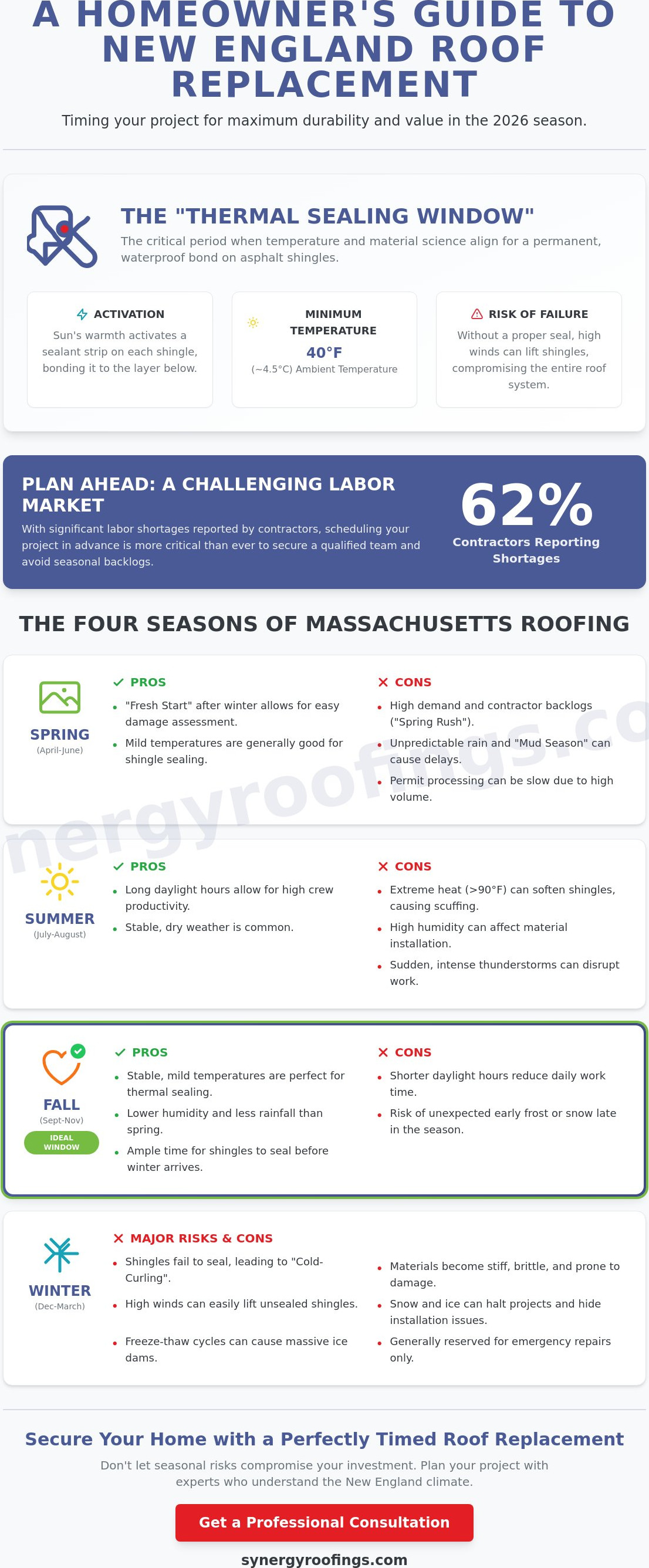
Asphalt shingles rely on a heat-activated sealant strip to stay in place. When we install a roof, we aren’t just relying on nails. The sun’s warmth triggers a reaction in the adhesive, bonding each shingle to the one below it. This process requires an ambient temperature of at least 40°F to work effectively. If you install a roof in the dead of winter, this seal doesn’t happen immediately. This leads to “cold-curling,” where the shingles remain stiff and brittle. Without a proper bond, high winds can easily catch the edge of a shingle and lift it, compromising the entire system before it even has a chance to settle. Proper timing ensures your home remains a sanctuary rather than a source of stress.
The Cost of Delay in Massachusetts
Waiting until you see water dripping into your attic during a February blizzard is a costly mistake. In Norfolk County, the freeze-thaw cycle is brutal on aging materials. A tiny crack that goes unnoticed in October fills with water, freezes in December, and expands to tear apart your roof’s substrate. This often leads to massive ice dams that trap water against your home’s structure. While a roof leak repair can offer temporary relief, it’s often a bandage on a wound that requires a full solution. Proactive replacement ensures your Domestic roof construction remains sound, preventing the structural rot that comes from neglected maintenance. By choosing the right season, you secure a perfect seal and long-term peace of mind.
The Four Seasons of Massachusetts Roofing: Pros, Cons, and Risks
Choosing the best time of year to replace roof in New England requires a strategic look at our local climate. Each season presents a unique set of variables that can either streamline your installation or complicate the long-term integrity of your home. While the “Thermal Sealing Window” we discussed previously is vital, you also have to navigate the logistical hurdles of the 2026 construction landscape, including material backorders and local permitting timelines. We aim to guide you through these choices with transparency and expert knowledge.
Spring: Racing Against the Rain
From April through June, many homeowners seek a “Fresh Start” after a long winter. This is an excellent period for asphalt shingle roofing inspections to identify damage from past ice or wind. However, this season is famously unpredictable. We often deal with “Mud Season,” which can make site access difficult for heavy material deliveries. Additionally, the spring rush means local building departments in Medway and surrounding towns are at their busiest. While permit processing times in the Northeast currently average 3 to 10 business days, high volume can cause unexpected delays. Starting early is the key to avoiding the summer backlog.
Summer: Heat Management and Humidity
July and August offer high productivity with long daylight hours, but they bring the risk of extreme heat. When temperatures exceed 90°F, asphalt shingles become soft and prone to “scuffing” during installation. Our crews must use specialized techniques to protect the material’s aesthetic and structural integrity. High humidity can also affect the drying time of underlayments and specific roof coatings. We prioritize safety and precision during these months, often scheduling work for early morning hours to ensure the best results for your property. If you’re concerned about how summer heat might affect your project, you can consult with our team to find a cooler installation window.
Fall: The Goldilocks Season
September through November is widely considered the ideal window. The air is crisp, the humidity is low, and the sun provides just enough warmth for shingles to cure before the first frost. This season allows for a smooth installation process with minimal weather-related interruptions. It is the final opportunity to secure your home before the harsh winter cycle begins.
Winter: When Emergency Takes Priority
We generally reserve December through March for emergency interventions. Installing a roof in freezing temperatures requires hand-sealing every shingle with roofing cement, as the self-sealing strips won’t activate on their own. While rubber and metal roofing are more resilient to cold-weather handling, the logistical challenge of clearing snow from a roof before a tear-off adds complexity. Proactive planning in the warmer months is the best way of Preventing Roof Ice Dams and avoiding the high costs of emergency winter repairs. If your roof is already showing signs of age, waiting for a winter storm is a gamble you don’t need to take.
Fall vs. Spring: Deciding Between the Two Best Roofing Windows
Choosing between the two peak seasons often comes down to your home’s immediate needs versus long-term technical performance. While both windows avoid the extreme ice of winter and the blistering humidity of summer, they offer different strategic advantages. If you are looking for the best time of year to replace roof in New England to ensure your home survives the next decade of Nor’easters, the choice between April and October matters more than you might think. We believe in providing you with the clarity needed to make a decision that protects your family and your finances.
Why Autumn is the Professional’s Choice
Experienced contractors often prefer the months of September and October for high-stakes installations. The consistent temperatures, usually hovering between 50°F and 60°F, provide the perfect environment for the thermal strips on your shingles to activate without the risk of overheating. Unlike the erratic temperature swings of spring, fall offers a steady environment that allows the roof to “cure” slowly and deeply. Low humidity levels during these months are also critical. They ensure that when we perform a tear-off, the roof deck remains bone-dry before the new underlayment is secured. This season is also an ideal time to consider high-performance materials like Cool Roofs, which can help mitigate the heating penalty during our cold Massachusetts winters while improving overall energy efficiency. Entering the winter season with a fortified, newly sealed roof provides a level of psychological relief that spring installations simply can’t match.
The Spring Advantage for Storm Recovery
Spring is often the busiest season for a different reason: necessity. After a long winter of heavy snow loads and ice dams, many homeowners discover leaks that weren’t there in November. This “reactive” rush makes spring scheduling highly competitive. However, the advantage of a spring installation is the immediate visibility of issues like compromised chimney flashing or damaged gutter installation that were hidden under snow for months. By scheduling in early April, you can address winter damage before the heavy spring rains begin. We often find that “early bird” slots with local Medway contractors are filled by February, so proactive planning is essential.
From a financial perspective, timing is equally vital. In 2026, we continue to see material price volatility driven by supply chain shifts and petroleum costs. Often, manufacturers offer year-end rebates in the fall to clear inventory, whereas the new year frequently brings price hikes for asphalt shingle roofing and metal roofing. Deciding whether to act now or wait until the next window can significantly impact your total investment and the ROI of your project. We recommend looking at your roof not just as a maintenance task, but as a “Winter Test” that your home must pass every single year. A fall replacement ensures you aren’t gambling with your property’s safety when the first blizzard of the season arrives.
Strategic Planning: Permits, Materials, and Professional Integration
Planning your project involves more than just circling a week on the calendar. It’s about navigating the administrative and logistical realities of the 2026 season. In Medway and throughout Norfolk County, the permit process generally takes between 3 and 10 business days. We always recommend building in extra time to account for the 9th Edition of the Massachusetts State Building Code (780 CMR) requirements. These codes dictate specific underlayment standards and limit asphalt shingle layers to two, which can significantly impact your project’s scope if a full tear-off is required. When you search for the best time of year to replace roof in New England, you must account for these lead times to ensure your installation isn’t stalled by paperwork.
Supply chain management is another critical factor this year. With asphalt shingle shipments having fallen by 10% in 2025, many popular materials are on backorder for weeks at a time. Some manufacturers are even predicting lead times of six months for specific high-performance products. We act as your protective partner in this process, helping you secure materials early so your “Thermal Sealing Window” isn’t missed due to a missing shipment of polyiso insulation or TPO membranes.
The Skylight Factor: Don’t Compromise Your Seal
A common mistake homeowners make is replacing a roof while leaving aged skylights in place. This often results in leaks within 24 months because the old flashing cannot integrate perfectly with the new roofing system. We utilize a “One-and-Done” strategy, recommending that you replace these units during the roofing project to maintain a factory-perfect seal. As Velux specialists, we ensure that your Velux skylight installation provides lasting protection and aesthetic appeal. This holistic approach prevents the need to disturb your new roof later, which could compromise the integrity of your shingle bond.
Material-Specific Timing Nuances
Your choice of material significantly shifts your ideal season. Metal roofing offers more flexibility than asphalt, as it doesn’t rely on heat-activated adhesive strips to create a waterproof barrier. This makes it a viable option even during the colder shoulder seasons. Conversely, rubber (EPDM) and SBS roofing for low-pitch structures are highly temperature-sensitive. These materials require specific thermal ranges for the adhesives to bond correctly. If you are considering a roof coating, you need a multi-day window of dry, mild weather to ensure the product cures without being compromised by humidity or sudden rain.
A complete timeline also includes gutter installation and chimney flashing. Coordinating these elements ensures that water is shed away from your foundation and that the most vulnerable joints of your home are reinforced. If you’re ready to secure your home’s future, schedule your professional assessment today to lock in your preferred 2026 installation window.
Securing Your Home with Synergy Roofing: Professional Timing and Reliable Results
At Synergy Roofing, we don’t just see a project; we see a home that needs safeguarding. Our approach to finding the best time of year to replace roof in New England is rooted in decades of local experience and a commitment to your home’s longevity. We understand that whether you choose the spring rush or the technical precision of a fall installation, the process must be seamless. We act as your guide, navigating the 2026 material shortages and labor constraints so you don’t have to. Our goal is to move you from a state of concern about potential leaks to a state of total resolution with a roof that stands the test of time.
In a year where 62% of contractors in our industry report difficulty finding skilled roofers, our steady and logical project management sets us apart. We prioritize transparency and community, ensuring that every client feels like a partner rather than just another job on the schedule. Regardless of the month you choose for your installation, you can expect a quiet confidence from our team and a high-quality solution that addresses your specific environmental risks.
The Synergy Difference: Beyond Just Shingles
We believe the best results come from a collaborative relationship between the provider, the materials, and the client. It isn’t just about nailing down asphalt shingle roofing. It’s about a holistic system designed for renewal. This includes professional chimney flashing and gutter installation to bulletproof your home against coastal storms. Our deep knowledge of the 9th Edition of the Massachusetts State Building Code (780 CMR) ensures that every layer of your roof meets or exceeds legal standards. This expertise is vital for protecting your manufacturer warranty and your property’s long-term value. We handle the complexities of the administrative process, ensuring your Medway or Norfolk County permits are filed correctly and on time.
Your 2026 Roof Replacement Roadmap
Your journey to a leak-free home begins with a clear, actionable roadmap. The best time of year to replace roof in New England is the window that aligns with your specific needs and our expert timing. We start with a comprehensive assessment that accounts for your property’s unique exposure to New England weather patterns. From there, we provide an estimate that reflects current 2026 material costs and availability, giving you a predictable path forward. The peace of mind that comes from a Synergy-certified installation is more than just a service; it is an emotional benefit that lets you rest easy during the next winter storm. By acting now, you secure your place in our schedule and ensure your home remains a safe haven for decades to come.
Request your free, professional roofing estimate from Synergy Roofing today and take the first step toward a secure, renewed home.
Secure Your Home’s Future Today
Timing your project correctly is the difference between a roof that merely covers your home and one that truly protects it. By targeting the “Thermal Sealing Window” in the fall or the proactive storm recovery window in the spring, you ensure your materials bond perfectly and your warranty remains intact. We’ve discussed how integrated planning, from skylight replacement to gutter installation, creates a unified defense against our harsh local climate. Identifying the best time of year to replace roof in New England is the first step in a collaborative process that yields long-term security and psychological relief.
Synergy Roofing brings 20+ years of Massachusetts expertise to every project. As a Velux Certified Specialist with an A+ rating for reliable storm protection, we act as your dedicated partner in home renewal. We’re here to guide you through the complexities of building codes and material choices with quiet confidence. Don’t wait for the next Nor’easter to test your home’s limits. Schedule Your Protective Roof Consultation with Synergy Roofing today to lock in your 2026 installation. We look forward to helping you protect your most valuable priority.
Frequently Asked Questions
Is it cheaper to replace a roof in the winter in Massachusetts?
No, winter replacements are typically not cheaper and often involve higher labor costs due to the technical challenges of the cold. We must hand-seal every shingle with roofing cement because the self-sealing strips won’t bond naturally in freezing temperatures. Snow removal and added safety measures for the crew also increase the project’s complexity. While some believe off-season rates are lower, the extra hours required for a safe, high-quality installation usually offset any potential savings.
Can you replace a roof in the rain or snow?
No, a professional installation should never occur during active precipitation. Moisture trapped under the underlayment can lead to rot, mold, and structural damage over time. If an unexpected storm begins during your project, our crews immediately secure the exposed areas with heavy-duty, waterproof tarps. We monitor local weather patterns with extreme precision to ensure the roof deck remains bone-dry during the entire tear-off and installation process.
How long does a typical roof replacement take in New England?
Most residential projects are completed in one to three days, depending on the size and pitch of your home. A standard 2,000 square foot property usually takes about two days of active work. Factors like multiple layers of old shingles, the need for new chimney flashing, or the installation of sun tunnels can add time to the timeline. We prioritize a steady, logical rhythm to minimize disruption while ensuring every detail is perfect.
Should I replace my skylights at the same time as my roof?
Yes, replacing your skylights during a roof project is the most cost-effective way to ensure a leak-free home. Reusing old skylights is risky because the existing flashing often fails to integrate correctly with new shingles and underlayment. As specialists in skylight replacement, we recommend updating these units now to avoid the high cost of disturbing your new roof later. This holistic approach guarantees a factory-perfect seal and long-term peace of mind.
How do I know if my roof can wait another season?
You can identify a failing roof by looking for shingles that are curling, cracking, or missing significant amounts of granules. If you see dark water stains on your attic rafters or near the chimney, moisture is already penetrating your home’s defenses. While you may want to wait for the best time of year to replace roof in New England, these signs indicate that your property is at risk. A proactive inspection can prevent a small issue from becoming a structural disaster.
What is the best month to find roofing discounts in MA?
Late February and March are often the best months to find manufacturer incentives before the spring rush begins. Many homeowners wait until they discover a leak in April, which leads to a surge in demand and limited scheduling flexibility. By booking your project during these quieter months, you often get better access to specific material colors and styles before 2026 supply chain delays impact inventory. Planning ahead allows you to secure your home before the peak season price hikes.
How does high humidity affect a new roof installation?
High humidity can cause the wood roof deck to swell and prevents adhesives from curing at their optimal rate. If shingles are installed over a damp or swollen deck, they may buckle or ripple as the wood eventually dries out. We track local dew points and humidity levels to ensure your installation happens during a stable weather window. This careful timing ensures that all sealants and underlayments perform exactly as the manufacturer intended for maximum durability.
Will a Nor’easter damage my roof if it’s currently being replaced?
Not if your contractor follows strict weather-safety protocols and only opens sections of the roof that can be sealed the same day. We never leave a home vulnerable to the elements when a major storm is in the forecast. Even if the best time of year to replace roof in New England includes a surprise coastal storm, your home remains protected by heavy-duty underlayment and temporary waterproof seals. Our goal is to act as your protective partner, ensuring your property stays dry regardless of shifting weather.