

Last February, a homeowner in Framingham watched the thermometer plunge to -6 degrees while 55 mph gusts rattled their windowpanes. Instead of sleeping, they spent the night listening for the telltale drip of an ice dam. You shouldn’t have to live with that uncertainty every time a Nor’easter appears on the radar. We believe your roof should be a silent guardian that offers total peace of mind through every season. Choosing the best roofing material for New England climate is the most critical decision you’ll make to ensure your home stays dry and your energy bills stay manageable.
This 2026 guide provides the clarity you need to protect your most valuable asset. We’ll explore how specific materials handle the 45 inches of average annual rainfall in Massachusetts and the brutal freeze-thaw cycles that compromise lesser roofs. You’ll learn which systems prevent costly moisture mitigation and which shingles offer the highest wind resistance ratings. We’re going to compare the integrity of modern asphalt, the seamless protection of metal, and the craftsmanship of slate so you can secure a beautiful, low-maintenance exterior for the next twenty years.
Key Takeaways
- Learn how the unique Massachusetts “weather cycle” and thermal shock fatigue standard roofing products and how to choose a system built for longevity.
- Compare top-tier options to identify the best roofing material for new england climate based on your home’s architectural style and a 30-year performance horizon.
- Discover why critical “unseen” components like high-grade underlayment and Ice and Water Shield barriers are your primary defense against ice dams and leaks.
- Evaluate how to balance your initial investment with long-term ROI to ensure your roof restoration adds maximum value to your property.
- Understand the “Synergy Advantage” of working with local experts who prioritize a comprehensive exterior approach to provide you with total peace of mind.
Understanding the New England Climate: Why Your Roof Fails in Massachusetts
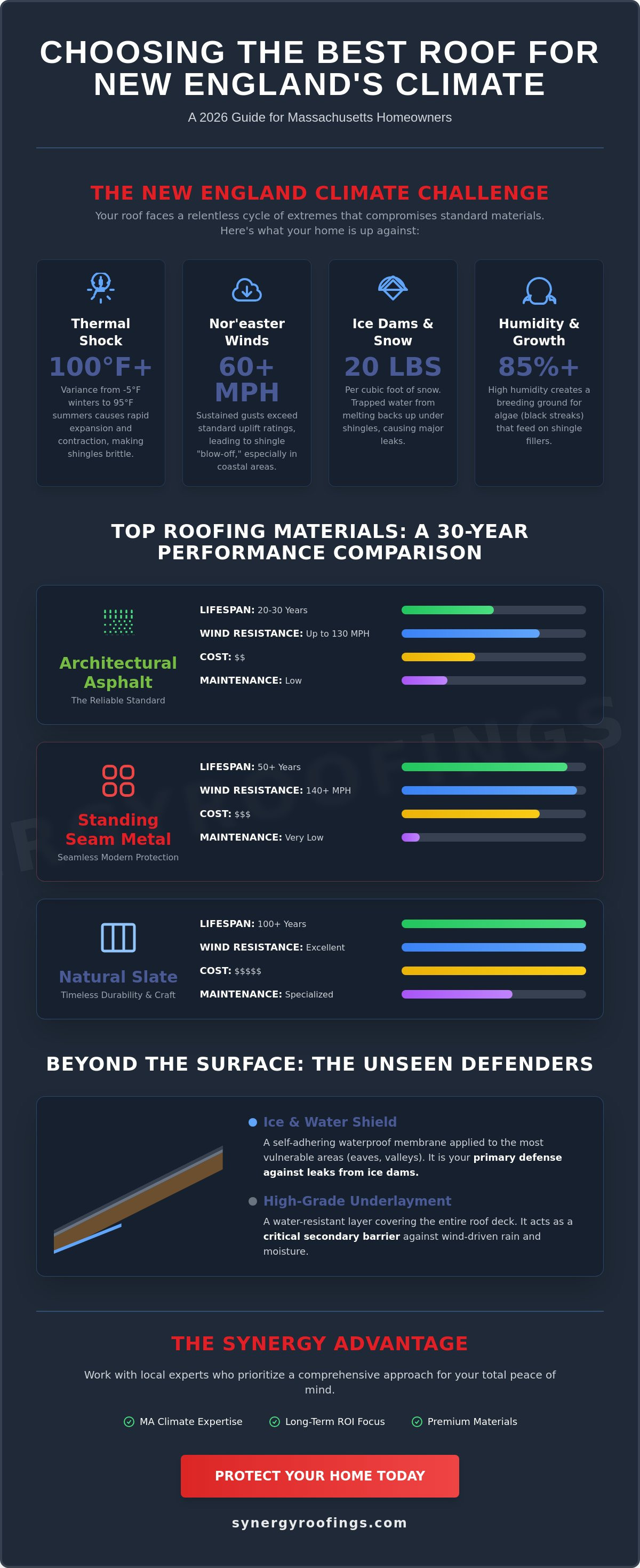
New England weather doesn’t just test your patience; it tests the structural integrity of your home every single day. In Massachusetts, your roof faces a relentless cycle of extremes. We see temperatures plunge to -5°F in January and soar to 95°F with 85% humidity in July. This 100-degree variance creates a phenomenon known as thermal shock. As the sun beats down, your roofing materials expand. When a sudden afternoon thunderstorm rolls through, they contract rapidly. This constant movement causes shingles to become brittle and lose their protective granules long before their time.
When you review a comprehensive list of roofing materials, you’ll find that many products designed for national use simply can’t handle our Nor’easters. These coastal storms often bring sustained winds of 60 mph or higher, which exceeds the standard wind-uplift ratings found in many basic building codes. For homeowners in coastal communities like Quincy or Scituate, salt air adds another layer of complexity. Salt accelerates the corrosion of standard galvanized fasteners; this leads to “roof blow-off” even if the shingles themselves are still intact. Finding the best roofing material for new england climate requires a system built for these specific local pressures.
To better understand how these environmental factors influence your choices, watch this helpful video breakdown:
The Threat of Ice Dams and Snow Load
Heavy snow is a hallmark of our winters, but it’s the weight and the melt-cycle that do the damage. A single cubic foot of packed snow can weigh up to 20 pounds. This puts thousands of pounds of static pressure on your rafters and decking. In Norfolk County homes, an ice dam is a ridge of ice that forms at the edge of a roof and prevents melting snow from draining off, primarily caused by heat escaping from poorly insulated attics. This trapped water backs up under your shingles and leaks into your ceilings. At Synergy Roofing, we emphasize that the best roofing material for new england climate must be paired with a robust ice and water shield underlayment to prevent this specific type of failure.
Humidity and Biological Growth
Massachusetts summers are notoriously humid, creating a breeding ground for biological growth. You’ve likely seen black streaks on local roofs; this is Gloeocapsa magma, a hardy algae that feeds on the limestone filler in many shingles. Our suburban tree cover in areas like Middlesex County compounds the issue by dropping organic debris that traps moisture against the roof surface. To combat this, we are seeing a shift toward “cool roofs” in 2026. These systems use specialized granules to reflect solar energy, keeping your attic cooler and reducing the energy load on your AC during those sticky 90-degree weeks. Proper protection means choosing materials that resist both the weight of the winter and the growth of the summer.
Top Roofing Materials for Massachusetts Properties: A Comparison
Choosing the best roofing material for new england climate requires looking far beyond the first winter. We evaluate every system based on a 30-year performance horizon. This long-term view is vital because Massachusetts homes, particularly those built before 1950, often have structural frames that can’t support heavy slate or tile without expensive reinforcement. We balance traditional New England aesthetics with modern engineering to ensure your home stays protected without compromising its structural integrity.
Our goal is to find the synergy between durability and design. Whether you live in a historic colonial or a modern coastal home, the material you choose must handle rapid freeze-thaw cycles and the salt air of the Atlantic. It’s about more than just keeping water out; it’s about protecting your most valuable asset for decades to come.
Architectural Asphalt Shingles: The Reliable Standard
GAF and Owens Corning shingles dominate the Massachusetts market because they’re engineered for our specific volatility. These manufacturers have perfected shingles that withstand 130 mph winds and heavy ice dams. Modern architectural shingles feature advanced granules that provide algae resistance and UV protection. This prevents the unsightly black streaks often seen on older roofs in Norfolk County. For homeowners in Medway, the cost-to-value ratio is excellent. You get a high-end look and high-performance protection without the premium price of natural materials. You can explore these benefits further in The Ultimate Guide to Asphalt Shingle Roofing.
Metal Roofing: Maximum Longevity and Snow Shedding
Standing seam metal is a top contender for the best roofing material for new england climate because it sheds heavy snow instantly. This prevents the massive weight buildup that leads to structural strain or interior leaks. Many homeowners worry about noise during storms, but modern installations use thick underlayment and solid decking to dampen the sound of rain. Industry experts at the Metal Construction Association note that metal roofing in cold climates provides superior thermal performance and longevity. If you’re looking for a 50-year solution that requires minimal maintenance, read The 2026 Homeowner’s Guide to Metal Roofing in Massachusetts to see if it fits your property.
Rubber (EPDM) and SBS for Low-Pitch and Flat Roofs
Standard shingles often fail on garage additions or low-slope structures because water doesn’t shed fast enough. For these specific areas, we utilize EPDM rubber or SBS modified bitumen. SBS is a “rubberized” asphalt that remains flexible during our sub-zero January nights, which prevents the cracking common in cheaper materials. These systems offer seamless protection and are the “peace of mind” choice for flat surfaces. If you’re concerned about a recurring leak on a flat porch or garage, our experts at Synergy Roofing can help you secure a watertight seal that lasts.
Beyond the Surface: The Critical Components of a New England Roof
While selecting the best roofing material for New England climate is a vital first step, a roof is only as strong as its hidden components. Most homeowners focus on the aesthetic of the shingle, but the real protection happens underneath. High quality synthetic underlayment acts as a final barrier against wind-driven rain that can bypass even the most durable shingles during a 60-mph Nor’easter. It’s a secondary skin that ensures your home stays dry even if the primary layer is compromised.
In Massachusetts, we deal with severe freeze-thaw cycles that create unique structural stress. This makes Ice and Water Shield barriers mandatory at your eaves and valleys. These self-adhering membranes create a watertight seal around nail penetrations, preventing ice dams from forcing water upward into your home. Without this specialized layer, even the most expensive roofing material will fail when the January snow starts to melt and refreeze.
Data from local inspections shows that chimney flashing remains the #1 failure point for residential roofs across the state. The junction where masonry meets the roof deck requires expert metalwork to remain watertight over decades. If you notice damp spots on your ceiling near the fireplace, it’s often a flashing issue rather than a shingle problem. You can learn more about identifying these vulnerabilities in our guide to Roof Leak Repair in Massachusetts.
Ventilation: The Key to Extending Roof Life
A roof needs to breathe to stay healthy. We install a combination of ridge vents and soffit vents to create a continuous flow of cool air through the attic space. This intake and exhaust system ensures your attic doesn’t become a heat trap that “cooks” your shingles from the inside out during the humid summer months. Proper airflow prevents the attic from reaching temperatures that exceed 150 degrees, which can void many manufacturer warranties. Consistent airflow regulates deck temperatures, which prevents the moisture buildup that leads to winter shingle buckling and premature plywood rot.
Integrating Skylights and Sun Tunnels Safely
Natural light adds immense value to your home, but every opening in the roof deck is a potential risk if not handled by experts. Synergy specializes in Velux skylights because they offer specific flashing kits designed to handle the heavy snow loads common in 2026 Massachusetts winters. We ensure a “Synergy” of light and protection by using a three-layer water protection system on every unit. If you’re considering adding light to your home, check out our expert advice on Velux Skylight Installation in Medway, MA. We make sure your skylight remains a beautiful feature, not a leak risk, by integrating it seamlessly into the best roofing material for New England climate.
Choosing the Best Material for Your Specific Massachusetts Home
Your home’s design and geographic location dictate the best roofing material for new england climate more than you might realize. A classic Colonial in Concord requires a different structural approach than a modern build tucked away in a wooded lot. We analyze four specific factors to ensure your roof provides lasting protection and seamless integration with your property.
First, consider your architecture. Symmetrical Colonials often look best with the deep texture of architectural asphalt or synthetic slate. Cape Cods, with their steep pitches, benefit from the clean lines of heavy-duty shingles. Second, your environment plays a massive role. If you live in a heavily wooded area of Norfolk County, you face higher risks of moss and moisture retention. Coastal homes need high wind-rated systems to withstand Atlantic storms. Third, respect local history. Towns like Medway and Concord have historic district commissions that often mandate specific materials or colors to preserve the neighborhood’s integrity. Finally, align your choice with your timeline. If you plan to sell within five years, a high-quality asphalt shingle offers the best ROI. If this is your forever home, metal or slate provides the ultimate peace of mind.
The Cost vs. Longevity Equation
Choosing a roof is a long-term financial strategy. Standard asphalt shingles typically last 20 to 25 years in our harsh winters. In contrast, standing seam metal or synthetic slate can protect your home for 50 years or more. While the initial investment for premium materials is higher, the cost per year is often lower over the life of the structure. High-quality, impact-resistant materials can also lead to a 5% to 12% reduction in homeowner insurance premiums, depending on your provider. To keep your manufacturer warranty valid, we recommend annual inspections to clear debris and check for minor seal failures.
Architectural Harmony and Curb Appeal
A roof accounts for up to 40% of your home’s visible exterior. Selecting the right color is vital for maintaining craftsmanship and value. We recommend shades that complement New England stonework and traditional siding colors like sea salt or navy. In Medway, a professional roof replacement can increase a home’s resale value by an average of $15,400, according to recent regional remodeling data. For added elegance, consider copper accents. Copper chimney flashing and valley liners develop a beautiful patina over time, offering both superior waterproofing and a sophisticated aesthetic that sets your property apart. We believe in creating a synergy between durability and style to protect what matters most.
Ready to find the perfect fit for your Massachusetts property? Contact Synergy Roofing today for a professional consultation and a detailed estimate tailored to your home’s unique needs.
The Synergy Advantage: Protecting What Matters Most in MA
Massachusetts weather is unforgiving. You need a partner who understands the specific challenges of our 2026 winters, rather than a national “storm chaser” who might be in another state by the time your first leak appears. Local expertise matters because we live in the same neighborhoods we serve. We know how the salt air on the South Shore or the heavy snow loads in the Berkshires impact your home’s integrity. By focusing on a holistic exterior approach, we ensure your roof works in harmony with your gutters and paint. This collaborative planning is the only way to achieve true peace of mind while ensuring you select the best roofing material for new england climate for your specific property.
National contractors often focus on volume, but we focus on the “Synergy” between every component of your home’s exterior. A high-quality roof fails if the gutters are undersized or the siding isn’t properly flashed. Our team takes the time to coordinate these elements, preventing the common points of failure that lead to ice dams and water intrusion. This comprehensive strategy is a core part of choosing the best roofers in Massachusetts. We act as your protective partner, guiding you through the selection process so your investment lasts for decades.
Our Precision Installation Process
We believe that a great roof starts with a clean job site. Our crew uses specialized equipment to protect your landscaping and windows before a single shingle is removed. We follow a meticulous protocol that includes:
- High-Grade Fasteners: We use hot-dipped galvanized or stainless steel nails to prevent rust and pull-out during high-wind events.
- Specialized Underlayments: We install premium ice and water shields that exceed standard building codes, providing an extra layer of defense against freezing cycles.
- The Synergy Fit: Our technicians ensure a seamless transition between your roof, gutters, and skylights to eliminate gaps where moisture could enter.
Our focus on precision means we don’t cut corners on the details that matter. When these components work together perfectly, you get the full benefit of the best roofing material for new england climate. We take pride in a clean finish, performing multiple magnetic sweeps of your yard to ensure every stray nail is recovered.
Secure Your Home for the Next Decade
Don’t wait for a Nor’easter to reveal a weakness in your home’s defense. Recent data shows a 12 percent increase in severe winter storm frequency across New England over the last five years, making proactive maintenance essential. A professional roof inspection identifies minor issues like cracked flashing or loose shingles before they turn into expensive interior damage. We provide every homeowner with a detailed, transparent estimate that explains the “why” behind our recommendations. There are no hidden fees or surprise costs; just honest advice from a local expert who cares about your safety.
Your home is your most valuable asset, and it deserves a roof that can stand up to the 2026 climate reality. We’re here to help you navigate the complexities of insurance and material choices with quiet confidence. Protect your home with a free roofing consultation from Synergy Roofing today. Let’s work together to secure your property and provide the long-term protection your family deserves.
Secure Your Massachusetts Home for the Decades Ahead
Choosing the best roofing material for new england climate requires more than just picking a color. It demands a system that withstands the 100 plus inches of snow some Massachusetts winters deliver and the high velocity winds of coastal storms. You’ve learned that while asphalt shingles offer versatility, the integrity of your roof relies on professional grade underlayment and proper ventilation. These components work together to prevent ice dams and premature wear. Synergy Roofing brings over 20 years of local experience to every project, ensuring your home remains a sanctuary regardless of the forecast.
Our team holds the prestigious Velux 5-Star Skylight Specialist designation, reflecting a commitment to craftsmanship that extends from your shingles to your gutters and exterior restoration. We don’t just install roofs; we build long term protection. You deserve the peace of mind that comes from a job done right the first time by neighbors who understand our local weather patterns. Protect what matters most, get your free Massachusetts roofing estimate from Synergy today. We look forward to helping you build a safer, more durable home for your family.
Frequently Asked Questions
What is the most durable roofing material for Massachusetts winters?
Metal roofing is the most durable option for Massachusetts winters because it sheds snow effectively and resists ice damming. Standing seam metal systems can last 50 years or more, providing long term protection against 45 inches of average annual snowfall. Architectural asphalt shingles are the best roofing material for new england climate when rated for 130 mph winds. We ensure every installation uses high quality underlayment for a seamless barrier.
Can I install a new roof over my old shingles in New England?
You can legally install a second layer of shingles in Massachusetts, but we strongly advise against it for your peace of mind. A “layover” prevents us from inspecting the roof deck for rot, which 15% of our inspections reveal. Adding a second layer also traps heat and doubles the weight on your home’s rafters. A full tear off ensures your new system starts with a clean, solid foundation that protects what matters most.
How much does a new roof typically cost in Massachusetts?
According to the 2023 Remodeling Cost vs. Value Report for the Boston area, a standard asphalt shingle roof replacement averages approximately $31,500. This figure varies based on your home’s square footage and the specific materials you choose. We focus on providing a transparent breakdown of costs so you understand the value of every shingle used. Investing in quality craftsmanship now prevents expensive emergency repairs during the 30 annual storm events Massachusetts typically experiences.
Are metal roofs too loud during New England rainstorms?
Modern metal roofs are not louder than asphalt shingles during New England rainstorms because they’re installed over solid wood decking and thick underlayment. These layers act as sound dampeners that absorb the noise of rain or hail. Research shows that a properly insulated metal roof only increases sound levels by 6 decibels compared to other materials. You’ll enjoy a quiet home environment while benefiting from the superior durability and protection that metal provides for your family.
How do I prevent ice dams on my Massachusetts roof?
Preventing ice dams requires a synergy of proper attic insulation, ridge ventilation, and waterproof underlayment. We install a minimum of 6 feet of ice and water shield along the eaves to meet Massachusetts building codes and prevent leaks from backup. Maintaining an attic temperature within 10 degrees of the outside air stops the freeze-thaw cycle that creates dams. This comprehensive approach ensures your home stays dry even during a record breaking winter like 2015.
What is the best material for a flat or low-pitch roof addition?
EPDM rubber is the most reliable material for flat or low pitch additions in the Northeast because it handles extreme temperature swings without cracking. This synthetic membrane is 60 mils thick and creates a seamless, waterproof seal over your living space. For homeowners seeking energy efficiency, white PVC membranes reflect 80% of solar heat, which lowers cooling costs during humid Massachusetts summers. Both options provide the integrity needed to handle heavy snow loads on low slope structures.
Do I need to replace my skylights when I get a new roof?
We recommend replacing your skylights during a roof replacement because it’s the only way to guarantee a leak free seal. Most skylights have a 20 year lifespan, matching the timing of a new roof. Replacing them together allows us to integrate the new flashing with the best roofing material for new england climate for a unified defense. This proactive step saves you from paying for a separate repair 5 years later when old seals fail.
How long does a roof replacement take for a standard Massachusetts home?
A standard roof replacement for a 2,500 square foot Massachusetts home typically takes 1 to 2 days to complete. Our crew arrives at 7:00 AM to begin the tear off process and aims to have the new underlayment installed by the first evening. We prioritize a clean job site and efficient workflow to minimize disruption to your daily routine. This rapid turnaround ensures your home isn’t exposed to unpredictable weather for longer than necessary.