

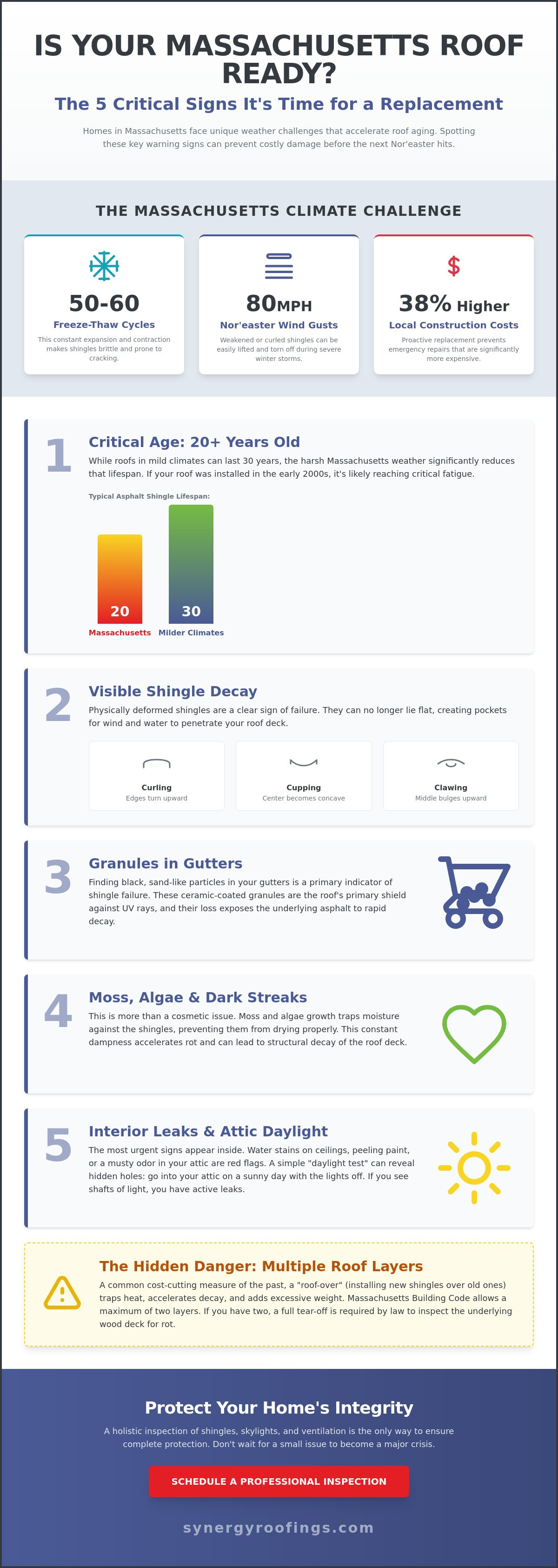
Did you know Massachusetts homes endure 50 to 60 freeze-thaw cycles every single year? This constant expansion and contraction places a unique burden on your shingles, making them more vulnerable to the 80 mph wind gusts common during our winter Nor’easters. If you’re worried about hidden leaks or wondering if your exterior can handle another season, you aren’t alone. It is natural to feel uncertain when local construction costs sit 38% higher than the national average. You want to ensure every dollar spent provides lasting protection and peace of mind for your family.
We believe that a roof is a protective shield where every component must work in synergy to keep you dry. This guide identifies the five critical signs you need a new roof massachusetts to help you spot failure before it leads to costly interior damage. We will walk you through the specific warning signals unique to our climate, from ice dam indicators to shingle degradation. You will also learn about the latest 2026 standards for architectural shingles and R-49 insulation. Our goal is to give you a clear roadmap to secure your home’s integrity so you can stop worrying and start protecting what matters most.
Key Takeaways
- Learn how to identify the specific signs you need a new roof massachusetts before the next Nor’easter compromises your home’s structural integrity.
- Spot early warnings like granule loss in your gutters and curled shingle edges that indicate your protective barrier is thinning.
- Understand how failing chimney flashing and poor attic insulation combine to create destructive ice dams during the winter months.
- Perform a simple “daylight test” to find hidden holes in your attic before they’ve caused significant interior water damage.
- Discover why a holistic inspection of your shingles, skylights, and ventilation is the best way to restore your peace of mind.
The Massachusetts Roof Lifespan: Why Our Climate Demands More
In New England, a 20-year-old roof isn’t just “old”; it is often approaching a state of critical fatigue. While asphalt shingles in milder climates might stretch to 30 years, the Massachusetts environment accelerates wear through relentless Nor’easters and heavy snow loads. If your home was built or reroofed during the early 2000s, 2026 is a pivotal year for your property’s safety. Many homeowners find that shingles installed two decades ago have lost the flexibility needed to shed heavy snow or resist 80 mph wind gusts. Recognizing the signs you need a new roof massachusetts now can prevent a minor leak from turning into a major structural restoration project.
To better understand common roofing failures and how they manifest over time, watch this helpful video:
Our local weather patterns demand more from your roofing system than almost anywhere else in the country. We see a unique synergy of high humidity in the summer and deep freezes in the winter. This cycle puts immense pressure on the fasteners and underlayment that keep your home dry. When these components fail, the integrity of your entire house is at risk.
Thermal Expansion and Contraction in Norfolk County
In areas like Medway and throughout Norfolk County, your roof faces 50 to 60 freeze-thaw cycles annually. This constant shifting causes shingles to become brittle and crack. Without proper attic ventilation, heat builds up and bakes the shingles from the inside out, leading to premature decay. This thermal stress is also a major contributor to ice dams on roofs, which occur when snow melts on the upper parts of the roof and refreezes at the cold eaves. At Synergy Roofing, we focus on the entire system to ensure your attic temperature remains consistent, protecting your shingles from this destructive cycle.
The ‘Hidden’ Age Factor: Previous Layering
A common issue we encounter in Massachusetts is the “roof-over,” where a second layer of shingles was installed over an existing one. While this saved money in the past, it creates a hidden age factor that accelerates failure. The extra weight of a second layer stresses the rafters, and the heat trapped between the layers causes the top shingles to cup and curl much faster. Identifying the signs you need a new roof massachusetts often starts with looking at your shingles’ physical shape under these extreme conditions. Per the Massachusetts Building Code (780 CMR), a maximum of two layers is allowed. If your home already has two layers, the law requires a full tear-off down to the deck. A full replacement is the only way to inspect the wood for rot and ensure your home has the durability it needs for another twenty years.
External Red Flags: Shingle Decay and Gutter Evidence
The exterior of your home provides the most obvious clues about its current health. After a season of heavy snow and high winds, your shingles may start to show their age through physical deformation. Identifying the signs you need a new roof massachusetts homeowners often overlook can save you from a catastrophic leak during the next storm. We believe in protecting what matters most by catching these issues before they compromise your home’s interior.
When shingles reach the end of their functional life, they lose their ability to lie flat. You might notice curling, where the edges turn upward, or cupping, which creates a concave shape in the center of the shingle. Clawing is another common failure, where the edges stay flat but the middle bulges. These shapes aren’t just aesthetic issues. They create pockets where wind can catch, leading to “shingle lift” during those 60 to 80 mph gusts we experience during Nor’easters. Moss and algae growth are more than just an aesthetic problem for Massachusetts homes. These organisms trap moisture against the shingles, which accelerates rot and can lead to structural decay.
Granule loss is the primary indicator of UV protection failure. These small, ceramic-coated pebbles are designed to shield the underlying asphalt from the sun’s rays. When you see what looks like coarse sand in your downspouts, your roof is losing its “sunscreen.” This leads to bald spots, where the black substrate is visible. Without this protection, the shingles become brittle and crack, leaving your home vulnerable to water intrusion and heat damage.
Visual Inspection from the Ground
You don’t need to climb a ladder to get a clear picture of your roof’s integrity. Grab a pair of binoculars and walk around your property to spot cracked, broken, or missing shingles. Pay close attention to the roof lines. If you see uneven dips or structural sagging, it may indicate that the decking underneath has been compromised by moisture. Spotting these issues early is the best way to ensure the long-term restoration of your home’s exterior.
What Your Gutters Are Telling You
Your drainage system acts as a diagnostic tool for your roof. While a small amount of sediment is normal for new shingles, a significant accumulation of granules in your gutters means the protective layer is failing. Clogged gutters also prevent proper drainage, which is a leading cause of eave rot. This moisture buildup is a key factor in the formation of ice dams. For more information on the mechanics of this process, the National Weather Service offers a guide on Preventing Ice Dams. If you aren’t sure what you’re seeing, a quick professional assessment can provide the clarity and peace of mind you need to move forward.
The Weak Links: Skylights, Flashing, and Ice Dams
A roof is only as strong as its most vulnerable points. In Massachusetts, these are often the areas where the roofing material meets a chimney, a vent, or a skylight. These intersections rely on flashing, which consists of thin metal strips, to divert water away from seams. When flashing corrodes or pulls away, it creates a direct path for moisture to enter your home. This is one of the most common signs you need a new roof massachusetts contractors look for during a professional assessment. We focus on these details because a single failed joint can compromise your entire restoration project.
We’ve discussed how our climate fatigues shingles, but the ‘Ice Dam’ cycle is a specific New England disaster that often starts at these weak links. It happens when heat escapes your attic and melts snow on the upper roof. That water then refreezes at the cold eaves, creating a dam that forces water back under your shingles. According to the Massachusetts Building Code (780 CMR), an ice and water shield must extend at least 24 inches inside the interior wall line to provide adequate protection. If your current roof was installed without this critical barrier, you are at a significantly higher risk for interior water damage during our 2-4 annual Nor’easters.
Specialized Skylight Warning Signs
Skylights are beautiful additions, but they are essentially a hole in your protective shield. If you have older Velux windows, pay close attention to the seals. One of the first signs of failure is condensation trapped between the glass panes. This indicates the gas seal has broken, compromising the window’s energy efficiency and structural integrity. You should also look for water stains or “active” dampness around the light shaft or ceiling frame. These leaks often start small but can lead to significant rafter rot if ignored. If you’re seeing these issues, check out our Velux skylight installation guide to explore modern, leak-proof replacement options that work in synergy with a new roofing system.
Chimney Flashing and Valley Vulnerability
Chimneys are a primary failure point because they expand and contract at different rates than the rest of your home. Many homeowners try to fix these leaks with a “caulk-only” approach. This is always a temporary fix in our harsh climate. Proper protection requires step flashing and counter-flashing that is physically tucked into the masonry joints. If you see rusted metal or flashing that has pulled away from the brick, your home’s interior is no longer secure. Similarly, roof valleys handle massive volumes of water during a storm. These areas require heavy-duty ice and water shield membranes to maintain their durability. Without them, high-velocity runoff can easily find its way under the shingles, leading to the “hidden” rot that ruins your peace of mind.
Interior Evidence: Attic and Ceiling Red Flags
While the exterior of your home offers many clues, your attic often provides the most honest assessment of your roof’s health. It acts as an early warning system, revealing issues before they manifest as a collapsed ceiling or a flooded living room. If you haven’t ventured into your crawlspace lately, now is the time to perform a thorough check. Identifying these signs you need a new roof massachusetts homeowners often miss can be the difference between a simple restoration and a total structural overhaul.
Start with the ‘Daylight Test.’ On a bright day, turn off all the lights in your attic and look up toward the ridge and valleys. If you see pinpricks of light peeking through the boards, you have holes that are letting in more than just sunshine. These openings are invitations for moisture and pests. Next, examine your rafters for water stains, dark streaks, or “active” dampness. Wet wood is soft wood, and over time, this moisture compromises the integrity of your home’s skeleton. You might also notice a persistent musty smell. Mould and mildew thrive in the damp, stagnant air of a compromised attic, often signaling that your underlayment has failed.
Your utility bills are another diagnostic tool. If you’ve seen a sudden spike in heating or cooling costs in 2026, your roof might be the culprit. When moisture infiltrates your attic, it causes insulation to sag and clump, stripping away its thermal resistance. In Massachusetts, the current building code requires a minimum of R-49 insulation for major renovations. If your insulation is waterlogged, it can’t do its job, forcing your HVAC system to work overtime. Replacing a failing roof allows us to restore that critical synergy between your shingles and your insulation, ensuring your home remains efficient and comfortable.
Tracking the Source of Interior Leaks
Finding the source of a leak is often a game of detective work. Water rarely travels in a straight line; it typically enters through a breach and runs down a rafter or along a seam before dripping onto your ceiling. This means the brown spot in your bedroom might be several feet away from the actual hole in your roof. If you find active moisture, you need to act fast to prevent wood rot. You can find immediate mitigation steps in our roof leak repair guide to protect your belongings while you wait for a professional assessment.
Structural Integrity: The Sagging Deck
A healthy roof should have a straight, firm silhouette. If you notice visual dips in the ridge line or “waves” in the roof planes from the street, you are likely looking at a compromised deck. Roof deck rot is the result of long-term underlayment failure that allows water to soak into the wooden sheathing. When we perform an inspection, we often look for a “spongy” feel when walking on the surface, which is a clear indicator that the wood has lost its strength. If your roof feels soft underfoot or looks uneven, it is time to prioritize your safety. Contact Synergy Roofing today for a professional inspection to ensure your home’s foundation remains secure and your family stays protected.
The Synergy Solution: Professional Inspection and Peace of Mind
Identifying the signs you need a new roof massachusetts homeowners often spot from the ground is the first step toward securing your home’s future. However, a professional inspection is the only way to confirm if your system has reached a state of “total loss” or if targeted repairs can extend its life. We believe that a roof is more than just a collection of shingles. It is a complex system where the underlayment, flashing, gutters, and ventilation must work in synergy to provide lasting durability against New England weather.
When restoration becomes necessary, choosing the right material is vital for long-term protection. While asphalt shingle roofing remains the most popular choice due to its 60-70% ROI at resale, many local residents are turning to standing seam metal for its superior ice dam resistance. Regardless of the material, our focus remains on craftsmanship and integrity. We ensure every component is installed to meet or exceed the 2026 Massachusetts Building Code requirements, including the critical R-49 attic insulation standards that keep your energy costs stable.
What to Expect During a Synergy Inspection
Our process begins with a comprehensive analysis of your entire exterior. We don’t just glance at the shingles; we examine the health of your chimney flashing, the seal of your skylights, and the efficiency of your ventilation. You will receive a transparent report that clearly outlines your options for repair versus replacement. If your roof has suffered from recent storm damage, we also assist you through the complexities of the insurance claim process. Our goal is to act as your guide, providing the professional weight needed to ensure your claim is handled fairly and accurately.
Protecting What Matters Most
Choosing a contractor with deep roots in Medway and the surrounding Norfolk County area ensures your home is prepared for our specific climate stressors. Local expertise matters when you are dealing with 60 annual freeze-thaw cycles and heavy snow loads. We take pride in our “no-nonsense” approach to construction, combining blue-collar hard work with modern business standards. This commitment to quality allows us to offer a “Peace of Mind” warranty that protects your investment for decades to come.
Restoring your home’s protective shield shouldn’t be a source of stress. By addressing the signs you need a new roof massachusetts early, you prevent minor issues from becoming major financial burdens. Protecting what matters most starts with a professional partnership built on honesty and specialized knowledge. Contact Synergy Roofing today for a free, no-pressure estimate and take the first step toward a dry, secure, and beautiful home.
Securing Your Home’s Future Before the Next Big Storm
Your home is your most valuable asset, and its integrity depends on a roofing system that works in total synergy. By monitoring shingle decay and inspecting your attic for daylight or moisture, you can take control of your property’s restoration before New England weather causes interior damage. Understanding the signs you need a new roof massachusetts homeowners often overlook is the best way to avoid emergency repairs during a winter Nor’easter.
At Synergy Roofing, we bring 25+ years of Massachusetts roofing expertise and an A+ rating for storm damage restoration to every project. As a Velux 5-Star Skylight Specialist, we ensure that every window, shingle, and flashing joint provides the durability your home deserves. We are here to act as your protective partner, guiding you through the complexities of construction with honesty and transparency. Don’t wait for the next heavy snow load to test your roof’s strength. Take the first step toward lasting peace of mind and protecting what matters most.
Request Your Free Medway Roof Inspection & Estimate Today
Frequently Asked Questions
How long does a typical asphalt shingle roof last in Massachusetts?
An asphalt shingle roof in New England typically lasts between 20 and 25 years, though our unique climate often accelerates this timeline. The 50 to 60 annual freeze-thaw cycles and 80 mph wind gusts common during Nor’easters cause shingles to become brittle and lose granules faster than the national average. If your roof was installed in the early 2000s, it is likely approaching the end of its functional life and requires a professional assessment.
Can I just repair a section of my roof instead of replacing the whole thing?
You can repair a section of your roof if the damage is limited to a small, isolated area, such as a few shingles lost during a single storm. However, if your roof is over 15 years old, the surrounding shingles are often too brittle to allow for a seamless repair. In these cases, a patch may not bond correctly, leading to future leaks. We evaluate the entire system to ensure any solution provides long-term protection for your home.
What are the most common causes of roof leaks in Norfolk County?
Ice dams and failed flashing are the primary causes of leaks in Medway and surrounding towns. When heat escapes into the attic, it melts snow that then refreezes at the cold eaves, forcing water under the shingles. Corroded chimney flashing and aging skylight seals are also frequent culprits. Maintaining proper R-49 insulation and clear gutters is essential to preventing these common local issues.
Does homeowners insurance cover roof replacement after a Nor’easter?
Homeowners insurance typically covers roof replacement if the damage is caused by a sudden peril, such as wind or hail from a Nor’easter. It does not cover damage resulting from age or lack of maintenance. Many Massachusetts insurers now offer premium reductions of 5% to 15% for homeowners who upgrade to Class 4 impact-resistant shingles. We provide transparent reports to help you navigate the claims process with confidence.
How much does a new roof cost in Medway, MA in 2026?
The average cost for a new architectural shingle roof on a typical 1,800-square-foot home ranges from $9,500 to $18,000 in 2026. Construction costs in Massachusetts are currently 38% higher than the national average, with prices increasing about 4% to 6% annually. You should also budget for municipal building permit fees, which typically range from $75 to $300 depending on your local building department’s fee schedule.
Is it better to replace skylights at the same time as the roof?
Replacing your skylights during a roof replacement is the most cost-effective way to ensure a watertight seal. Installing a new roof around an old skylight often disturbs the existing flashing, which can lead to leaks shortly after the project is finished. By replacing both together, we ensure the windows and shingles work in synergy, providing you with a comprehensive warranty and lasting peace of mind.
What is the best time of year to replace a roof in New England?
The best balance of pricing and availability is typically found in the spring, specifically from April through June. While August through October is the peak season for roofing in Massachusetts, scheduling in the spring often avoids the longer wait times and higher seasonal demand. Completing your project early in the year ensures your home is fully protected before the winter freeze-thaw cycles and heavy snow loads arrive.
How do I know if my chimney flashing is leaking?
You can identify a chimney flashing leak by looking for water stains on the ceiling near your fireplace or active dampness on the rafters in your attic. Physically, you may see rusted metal or gaps where the flashing has pulled away from the brick masonry. These are common signs you need a new roof massachusetts homeowners should watch for, as failed flashing is often the first indicator of a wider system failure.

One Response